Roofing Installation Services: Flawless 2025
Your Home’s First Line of Defense
Your roof is more than just shingles and beams; it’s the primary shield protecting your home, family, and investments from the elements. When it’s time for a new one, finding the right team for the job is crucial. Navigating a replacement can be daunting, but with the right information, you can make a confident choice in securing top-tier roofing services in the Houston area. This guide provides everything you need to know about roofing installation services to ensure your project is a success.
Essential Roofing Installation Services:
- Complete tear-off and replacement – Removing old materials and installing new ones
- Material selection consultation – Choosing from asphalt shingles, metal, or tile options
- Structural inspection and repair – Fixing damaged decking or sheathing
- Proper underlayment installation – Adding protective barriers beneath shingles
- Flashing and ventilation setup – Ensuring water-tight seals around penetrations
- Final cleanup and inspection – Leaving your property spotless
With the U.S. roofing market valued at $13.1 billion and growing at 5.1% annually, quality roofing installation has never been more important. A properly installed roof can increase your home’s value by 10-15% and last for decades with the right materials. The average project takes 1-3 days and costs between $5,000-$15,000, depending on the size and materials chosen.
I’m Andre Castro, CEO of Sienna Roofing & Solar, with over five years of experience delivering exceptional roofing installation services throughout the Houston Metro area. My hands-on approach and Construction Management background from Texas A&M ensure every project meets the highest standards. As a local business, we are committed to serving our community.
Sienna Roofing
17034 University Blvd, Sugar Land, TX 77479
(832) 564-3322
When to Replace, Not Repair: 5 Telltale Signs Your Roof Is at Its End
Deciding between a quick patch job and a complete roof overhaul can feel like a tough call. But here’s the thing – sometimes your roof is basically waving a white flag, and trying to bandage it up will only cost you more money in the long run. I’ve seen too many homeowners throw good money after bad, attempting to repair a roof that’s already past its prime.
The truth is, roofing installation services become necessary when your roof reaches certain critical points. Ignoring these warning signs can lead to water damage, structural issues, and repair bills that far exceed the cost of a new roof. Let’s walk through the five clear indicators that it’s time to call in the professionals for a complete replacement rather than another temporary fix.
The Age Factor
Your roof’s birthday matters more than you might think. Just like everything else, roofs have expiration dates that vary dramatically based on their materials.
Asphalt shingles, which cover about 75% of American homes, typically last 15-30 years. If your shingles are pushing this age range, they’re likely losing their protective powers even if they look decent from the ground. It’s kind of like an old car that still runs but needs constant repairs – sometimes it’s smarter to upgrade.
Metal roofing is the marathon runner of roofing materials, lasting 40-70 years or more. These systems can weather decades of storms and still keep your home dry. Tile roofs fall somewhere in the middle, often exceeding 50 years when properly maintained.
Here’s what’s interesting: age becomes the primary indicator for replacement even when other problems seem minor. A 25-year-old asphalt roof might only have a few curled shingles, but those small issues are often the tip of the iceberg.
Visible Damage and Decay
Your roof talks to you through its appearance, and learning this language can save you thousands. The key is knowing which cosmetic issues signal deeper problems.
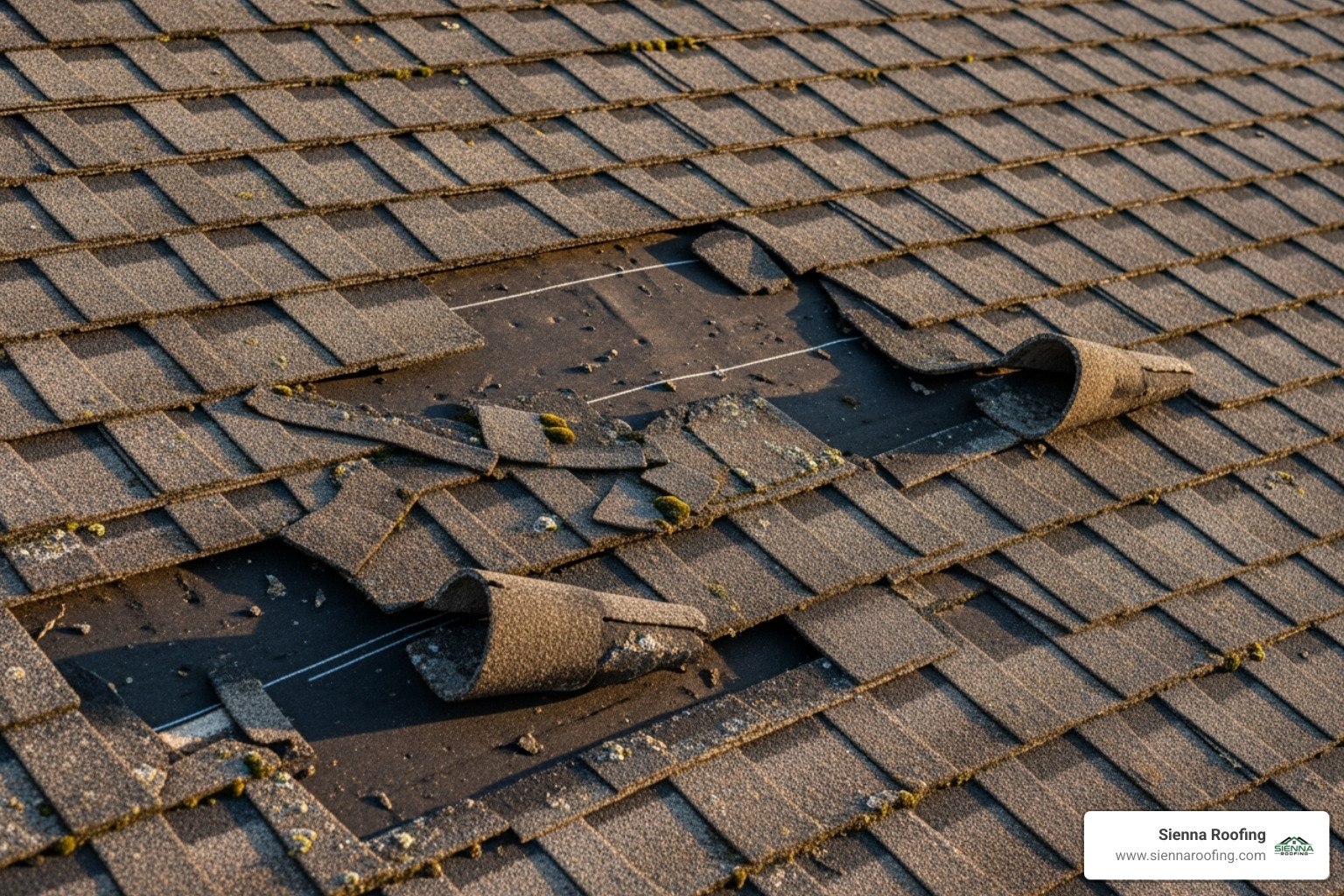
Curled or cracked shingles are like wrinkles on your roof – they show age and wear. When shingles curl at the edges or develop cracks down the middle, they can’t shed water effectively anymore. What starts as a small crack becomes a highway for moisture.
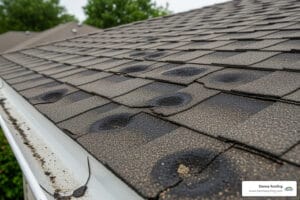
Granule loss creates those dark, bald patches you might notice on your shingles. These granules aren’t just for show – they protect your roof from UV rays and harsh weather. When they’re gone, your shingles become vulnerable. You’ll often find these granules collecting in your gutters like sand.
Moss and algae growth might look harmless, but they’re moisture magnets. In Houston’s humid climate, these green invaders can trap water against your roof surface, speeding up deterioration. While not always a death sentence, widespread growth often indicates underlying moisture problems.
Missing shingles are the most obvious red flag. Each missing shingle exposes your roof’s underlayment and decking to direct sunlight and rain. It’s like leaving a window open during a storm – water will find its way in.
If you’re dealing with isolated shingle problems, you might want to explore how to repair roof shingles. But when these issues cover large areas of your roof, replacement becomes the smarter financial choice.
Structural Warning Signs
Sometimes the real problems hide beneath the surface. These structural red flags demand immediate attention because they affect your home’s safety and integrity.
A sagging roof deck is never a good sign. Those dips and valleys in your roofline usually mean the underlying structure is compromised by moisture damage or excessive weight. This isn’t something you can patch – it requires professional intervention and often complete replacement.
Spongy or soft spots when walking on your roof indicate serious trouble below. The decking has likely absorbed moisture and begun to rot. This creates a dangerous situation where the roof could potentially give way under weight.
Attic leaks and water stains are your roof’s way of crying for help. Water stains on attic ceilings or walls prove that moisture has penetrated your roof’s defenses. Multiple leaks or persistent water intrusion typically signal widespread damage that goes beyond what simple repairs can fix.
Interior water damage – those brown stains on your living room ceiling – represents the final stage of roof failure. Once water reaches your interior spaces, it has traveled through multiple layers of protection. This level of penetration usually requires complete roof replacement to prevent ongoing structural damage.
When you spot these serious warning signs, you’re looking at more than just roofing problems. You’re potentially facing damage to insulation, framing, and interior finishes. Investing in professional replacement at this stage actually saves money by preventing cascading damage throughout your home.
For a deeper dive into replacement timing and processes, check out our complete roof replacement guide.
The Anatomy of a New Roof: Materials, Costs, and Timelines
Once you’ve decided on a replacement, the next step is understanding the components of your project. Think of this as building your home’s new suit of armor – every piece matters. The materials you choose, the overall cost, and the project duration are all critical factors that work together to determine your roof’s success.
A typical roofing installation services project in the U.S. can range from $5,000 to $15,000, but this varies significantly based on several key elements. Your roof’s size, the materials you select, and the complexity of your home’s design all play important roles in the final investment.
Understanding these components upfront helps you make informed decisions and avoid surprises down the road. Let’s break down what goes into creating your home’s perfect protective shield.
| Material | Pros | Cons | Cost Range | Lifespan |
|---|---|---|---|---|
| Asphalt Shingles | Affordable, widely available, variety of colors and styles, relatively easy to install, good fire rating | Shorter lifespan, can be damaged by severe weather, not as energy-efficient | $3-7 per sq ft | 15-30 years |
| Metal | Durable, long-lifespan, low maintenance, energy-efficient (cool roof options), fire-resistant, can withstand extreme weather, recyclable | Higher upfront cost, can be noisy during rain/hail, expansion/contraction issues if not properly installed | $5-12 per sq ft | 40-70 years |
| Tile | Very durable, excellent insulation, fire-resistant, attractive appearance, long-lasting | Heavy (requires structural support), expensive, can break if walked on, limited color options | $8-15 per sq ft | 50+ years |
| TPO/Flat Roofs | Energy-efficient, lightweight, resistant to UV rays and chemicals, cost-effective for large areas | Limited aesthetic appeal, seams can fail, requires professional installation, not suitable for steep slopes | $4-8 per sq ft | 15-25 years |
Choosing Your Armor: Common Roofing Materials
Selecting the right roofing material is one of the most important decisions you’ll make. It’s like choosing the right armor for battle – each type offers different strengths and protection levels.
Asphalt shingles dominate the market with a 75% market share for good reason. They offer excellent value, come in countless styles and colors, and work well in most climates. These versatile champions are perfect for homeowners who want reliable protection without breaking the bank.
Metal roofing has gained popularity as homeowners find its incredible durability and energy efficiency. Modern metal roofs come in styles that mimic traditional shingles or tiles, offering the best of both worlds – longevity and beauty. They’re particularly excellent in areas with severe weather, reflecting heat in summer and shedding snow and ice in winter.
Tile roofing brings Old World charm and exceptional longevity to your home. These heavyweight champions can last over 50 years and provide excellent insulation. However, they require a sturdy roof structure to support their weight.
Flat roofing systems like TPO and EPDM work well for modern homes and commercial buildings. They offer excellent energy efficiency and are cost-effective for covering large areas. For homeowners focused on maximizing energy savings, resources like the ENERGY STAR® program offer valuable guidance on energy-efficient roofing products.
For detailed information about specific materials, check out our guides on asphalt shingle roofing and metal roofing. You can also explore what is the best material to use for roofing in 2025 for the latest insights.
Budgeting for Your Project: What Influences the Cost?
Understanding what drives roofing installation services costs helps you budget effectively and avoid sticker shock. Several factors work together to determine your final investment.
Roof size and complexity are the biggest cost drivers. A simple ranch-style home costs significantly less than a multi-story house with dormers, valleys, and multiple angles. Each additional complexity adds labor time and material waste.
Material choice dramatically impacts your budget. While asphalt shingles might cost $3-7 per square foot, premium materials like slate or high-end metal can reach $15-20 per square foot. Remember though – higher upfront costs often mean longer lifespans and better performance.
Labor costs vary by region and season. In the Houston area, expect competitive pricing due to our active construction market, but quality workmanship is worth the investment.
Geographic location affects both material and labor costs. Texas homeowners benefit from competitive markets and year-round construction seasons, helping keep costs reasonable.
Permit fees and disposal costs add to your total investment but are necessary for legal compliance and environmental responsibility.
For specific Texas pricing information, visit our detailed guide on what is the average cost of a new roof in Texas.
How Long Will It Take?
Most residential roof installations take 1-3 days to complete, though several factors can affect this timeline. Weather is the biggest variable – we never compromise safety or quality by working in dangerous conditions.
Roof complexity significantly impacts duration. A simple gable roof might be completed in a single day, while a complex multi-level home with multiple angles and features could take several days.
Material choice also affects timing. Asphalt shingles install quickly, while tile or slate requires more careful, time-intensive installation.
Tear-off requirements add time to your project. Removing old materials safely and disposing of them properly takes additional time but ensures your new roof has the best possible foundation.
Scheduling depends on weather, material availability, and contractor availability. During peak seasons (spring and fall), quality contractors often book several weeks in advance.
We always provide realistic timelines upfront and keep you informed throughout the process. Your comfort and peace of mind are just as important as the quality of our work.