Commercial Roofing Missouri City 2025: Safeguard
Safeguard Your Business: The Essential Role of Commercial Roofing in Missouri City
For commercial roofing missouri city businesses, the roof is far more than a simple cover; it is the first and most critical line of defense against the region’s demanding climate. It is a fundamental component of your building’s envelope, directly impacting structural integrity, energy consumption, and operational continuity. Choosing the right materials and a reliable, expert contractor is not just an expense—it is a strategic investment that protects your physical assets, ensures the safety of your employees and customers, and safeguards your daily operations from costly disruptions. This guide provides data-driven insights and practical advice to help you navigate your next commercial roofing project with confidence and clarity. For a complete overview of our expertise and services, please visit Sienna Roofing’s homepage.
Quick Answer: Finding and Vetting Commercial Roofing Services in Missouri City
- Seek Proven Local Expertise: Prioritize contractors who demonstrate deep familiarity with Missouri City’s specific climate challenges, including 51 inches of annual rainfall, 95°F average summer highs, and Gulf Coast hurricane risks. Their material and installation recommendations should reflect this knowledge.
- Verify Comprehensive Credentials: Ensure any potential contractor holds current state licensing, carries robust general liability and worker’s compensation insurance, and possesses manufacturer certifications from industry leaders like GAF, Carlisle, or Firestone.
- Demand Transparent, Itemized Pricing: A trustworthy quote will break down all costs, including materials, labor, tear-off, disposal, and permits. Average replacement costs in the area range from $7–$15 per square foot, but a detailed proposal is essential for an accurate comparison.
- Prioritize Strong, Dual-Layer Warranties: Look for a combination of a manufacturer’s material warranty (protecting against product defects) and a contractor’s workmanship guarantee. The latter is a direct reflection of the installer’s confidence in their work.
- Check Reviews and Request Local References: Verify a contractor’s reputation through recent online testimonials and by speaking directly with past commercial clients in the Missouri City or Greater Houston area.
Missouri City’s unique climate—characterized by intense solar radiation, torrential rainfall, high humidity, and the ever-present threat of hurricanes—creates a formidable set of challenges for any roofing system. A poor material choice or substandard installation can lead to rapid deterioration, leaks, mold growth, and ultimately, premature failure. This can result in thousands of dollars in damage to inventory, equipment, and interiors, not to mention business downtime. This guide explains which roofing materials perform best under these conditions, how to identify critical warning signs of roof distress, and how a proactive maintenance plan can significantly extend your roof’s lifespan, potentially saving you tens of thousands in avoidable replacement costs.
For immediate assistance, a comprehensive roof assessment, or to discuss your project needs, contact Sienna Roofing’s commercial roofing experts at (832) 742-9928.
I’m Andre Castro, CEO and founder of Sienna Roofing & Solar. With a degree in Construction Management from Texas A&M University, I have dedicated my career to mastering the science and application of high-performance roofing systems. Having personally overseen hundreds of complex commercial and residential installations across the Houston Metro area, my hands-on approach ensures that every project we undertake meets the highest standards for durability, code compliance, and performance—all engineered to withstand our region’s uniquely demanding climate.
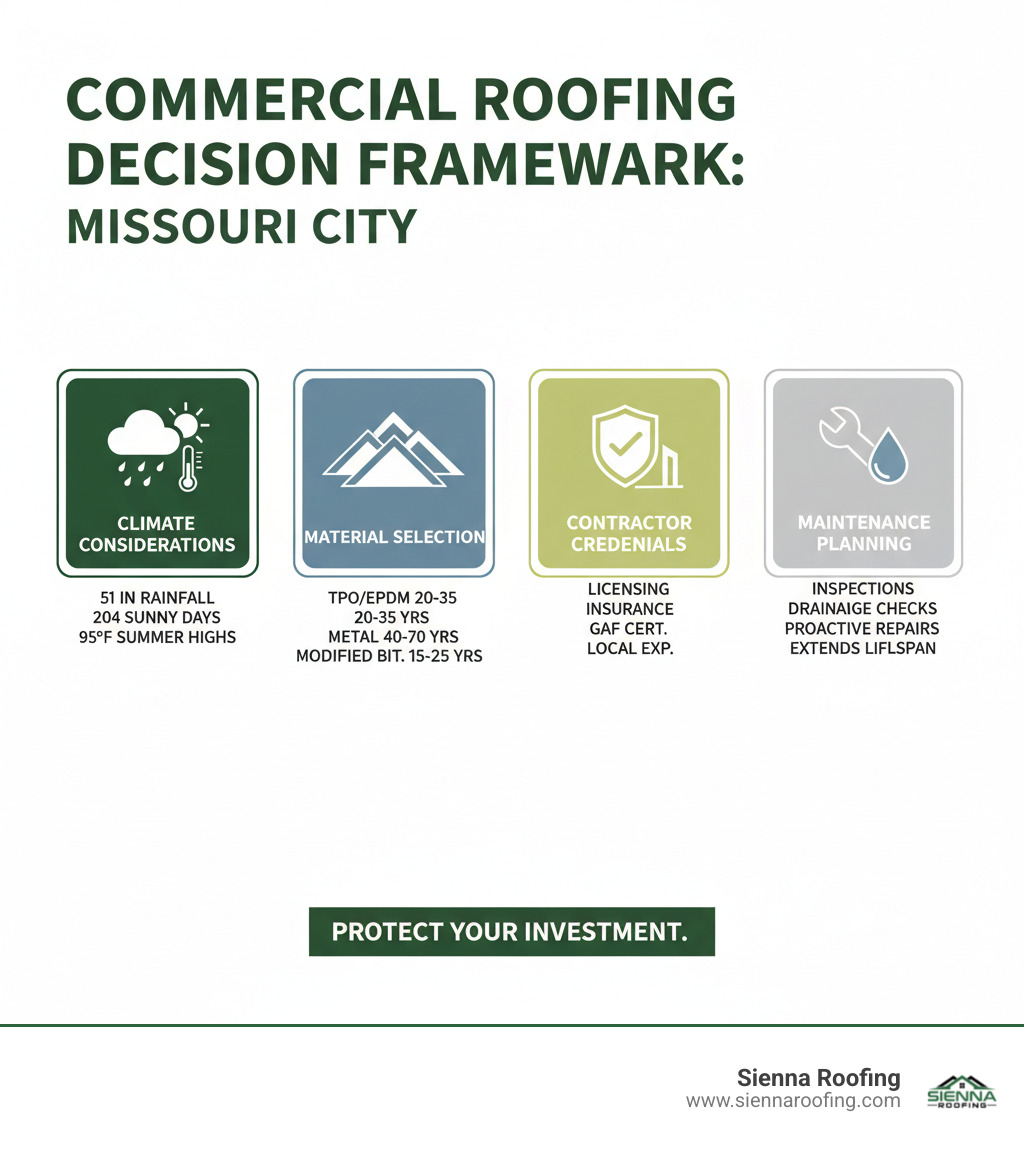
Commercial roofing missouri city terms simplified:
Section 1: Missouri City’s Climate—The Ultimate Test for Commercial Roofs

Your commercial roof faces a daily, relentless battle against Missouri City’s aggressive combination of sun, rain, wind, and humidity. A deep understanding of these environmental stressors is the foundation of every intelligent decision you’ll make regarding materials, installation techniques, and long-term maintenance. The climate data tells a clear story: 51 inches of annual rainfall, 204 sunny days, and average summer highs of 95°F demand highly specific, resilient roofing solutions.
1.1 Enduring Extreme Sun and Heat
On a typical 95°F summer day in Missouri City, a standard dark-colored roof surface can absorb solar radiation and reach temperatures of 150°F to 190°F. This intense heat creates a punishing cycle of expansion and contraction known as thermal shock, which is brutal on roofing materials, especially at the seams and flashing points. Over time, this stress causes materials to become brittle, crack, and fail. Furthermore, this absorbed heat radiates into your building, forcing your HVAC system to work overtime and significantly increasing energy expenditures. The urban heat island effect, prevalent in the greater Houston area, can exacerbate these temperatures even further.
Reflective or “cool roof” systems are the most effective countermeasure. Materials like white TPO or specially coated metal reflect a high percentage of sunlight, keeping the roof surface up to 50-60°F cooler. This directly translates to reduced energy consumption for cooling, often by 15-25%. A cooler roof also endures less thermal stress, which extends its functional lifespan. For any commercial roofing missouri city project, selecting a material with high UV resistance is non-negotiable to prevent the photochemical degradation that makes materials brittle and prone to failure.
1.2 Managing Heavy Rainfall and High Humidity
Missouri City receives approximately 51 inches of rain annually, a staggering 15 inches more than the U.S. national average. For the flat and low-slope roofs common on commercial buildings, this presents a critical engineering challenge. Inadequate drainage inevitably leads to ponding water—areas where water remains for 48 hours or longer. Water is heavy, weighing about 5.2 pounds per square foot for every inch of depth. Ponding water adds immense, often un-budgeted, stress to the building’s structure. It also acts as a magnifying glass for UV rays, accelerating the breakdown of roofing materials.
High humidity poses a more insidious threat. The moisture-laden air can penetrate microscopic gaps in the roofing system, promoting the growth of mold and mildew on and within the roof assembly. This can rot the underlying roof deck and compromise indoor air quality. A comprehensive waterproofing solution must include two key elements: a flawlessly installed membrane with watertight seams to create an impenetrable barrier, and a professionally designed drainage system (including properly sized drains, scuppers, and gutters) to evacuate water from the roof surface swiftly. Regular inspections are paramount to identifying and sealing potential vulnerabilities before they lead to catastrophic water intrusion.
1.3 Defending Against High Winds and Tropical Storms
Situated in the Gulf Coast region, Missouri City is susceptible to the powerful wind fields generated by hurricanes and tropical storms. Wind flowing over a roof creates significant uplift forces, similar to an airplane wing, that try to peel the roofing system away from the building. According to FEMA, these forces are not uniform; they are two to three times stronger at the roof’s corners and perimeters. An improperly secured roof, especially at these critical zones, can fail catastrophically, leading to a total loss of the system and exposing the entire building to the elements.
To combat this, Missouri City building codes mandate specific wind uplift resistance requirements based on standards like ASCE 7. Compliance is not optional; it is essential for ensuring your roof remains intact when it matters most. This involves using the correct type and spacing of fasteners, employing enhanced perimeter fastening techniques, and ensuring all flashing is robustly secured. Every commercial roofing missouri city installation we perform is meticulously engineered to meet or exceed local wind codes, using methods and materials proven to withstand real-world storm conditions. For more information on protecting your property, refer to FEMA’s guidelines on hurricane readiness.
Section 2: The Best Commercial Roofing Materials for Missouri City Businesses
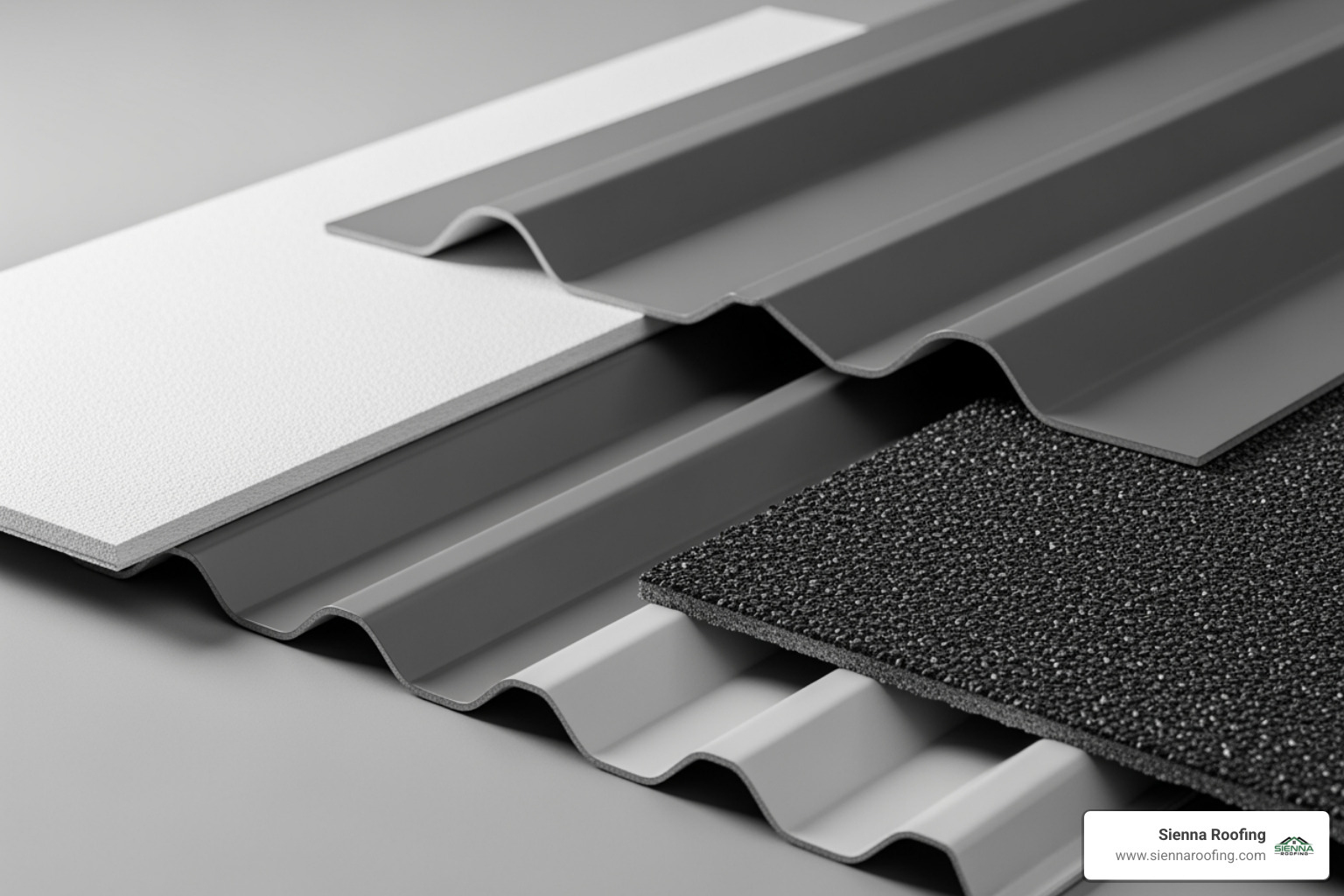
In Missouri City’s harsh climate, your choice of roofing material directly dictates your roof’s performance, longevity, and overall lifecycle cost. When we evaluate materials for commercial roofing missouri city projects, we focus on four critical factors: expected lifespan, energy efficiency, initial installed cost, and durability against local weather phenomena.
2.1 Single-Ply Membrane Roofing (TPO & EPDM)
Single-ply systems are the modern standard for flat and low-slope commercial roofs, offering a seamless, flexible, and highly effective watertight barrier.
-
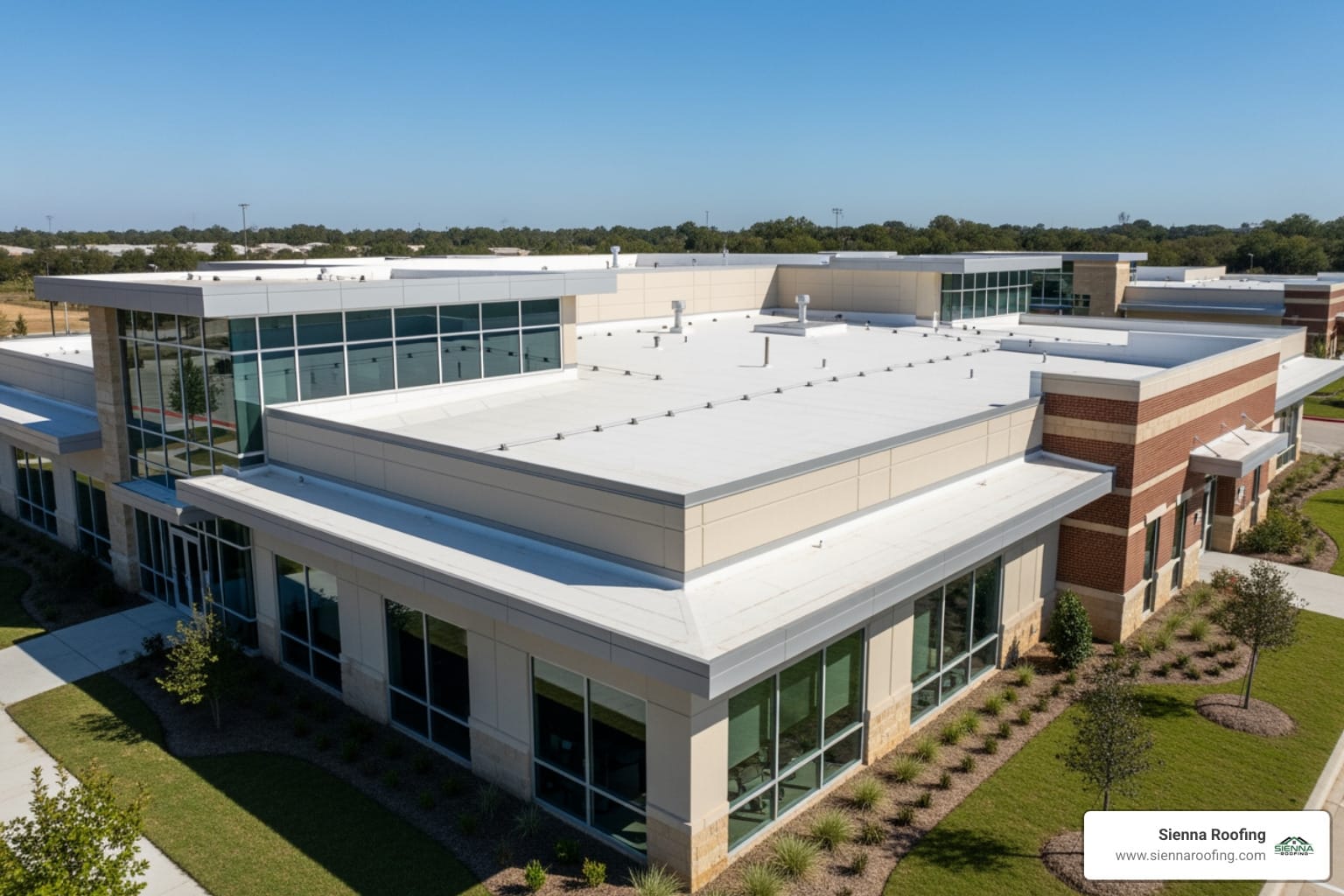
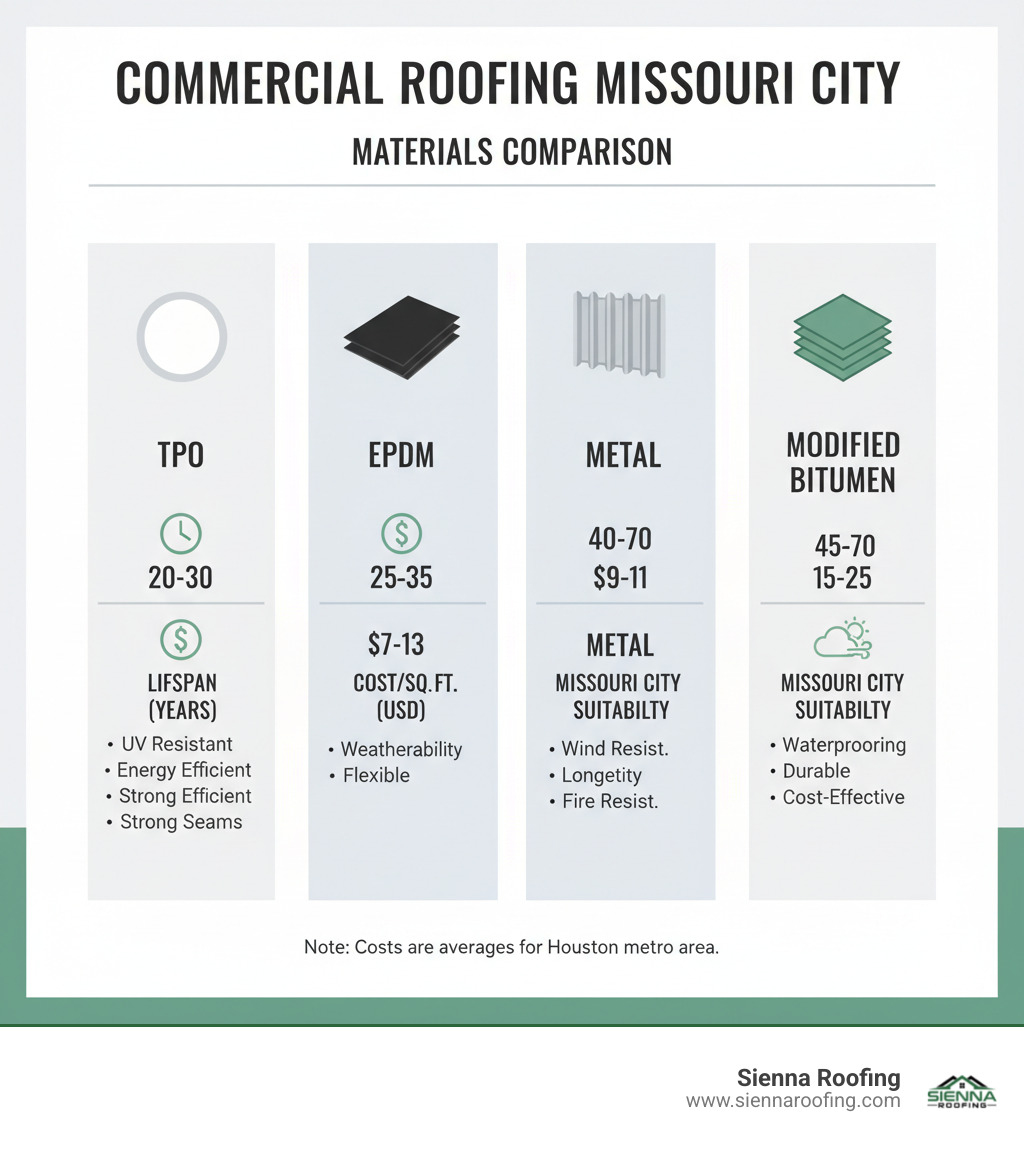
TPO (Thermoplastic Olefin): This is arguably the most popular choice for our region. Its standard white, reflective surface is a major advantage, bouncing intense solar radiation away from the building and significantly lowering cooling costs. TPO membranes are available in various thicknesses (e.g., 45, 60, 80 mil), with thicker options providing greater puncture and weathering resistance. The seams are heat-welded with hot air, fusing them into a single, monolithic sheet that is exceptionally strong and impenetrable to water. With a typical lifespan of 20-30 years, TPO offers a fantastic balance of performance and value, with installed costs generally ranging from $7 to $13 per square foot.
-
EPDM (Ethylene Propylene Diene Monomer): Often called “rubber roofing,” EPDM’s standout feature is its exceptional flexibility and ability to handle thermal expansion and contraction without cracking. While traditionally black (which absorbs heat), it is now available with white reflective coatings to improve energy efficiency. It boasts superior resistance to hail and thermal shock. Installation methods vary, including fully adhered, mechanically fastened, or ballasted systems, allowing for versatility depending on the building’s structure. EPDM is a durable, long-term solution, lasting 25-35 years with proper maintenance, at a cost of $6 to $12 per square foot.
2.2 Metal Roofing Systems
For business owners prioritizing maximum longevity and durability, metal roofing is an unparalleled choice, often lasting 40 to 70 years. Systems are typically fabricated from coated steel or aluminum. Standing seam metal roofs are particularly effective for commercial buildings, as the raised, interlocking seams provide superior protection against water intrusion while allowing for thermal movement. These systems offer exceptional wind uplift resistance and are non-combustible, which can sometimes lead to lower insurance premiums. While the upfront cost is higher—typically $9 to $18 per square foot—the minimal maintenance, extreme lifespan, and energy savings from cool-coated finishes often make metal the most economical choice over the life of the building.
2.3 Modified Bitumen Roofing
Modified Bitumen (“Mod-Bit”) is a modern evolution of traditional asphalt roofing. It incorporates polymer modifiers—either APP (for heat-weldability and UV resistance) or SBS (for flexibility and cold-weather performance)—that dramatically improve its resilience. Its multi-layer application (typically two or three plies) creates a thick, robust, and redundant waterproofing system that is highly resistant to punctures and foot traffic. This makes it an excellent choice for roofs with heavy equipment or frequent access. A reflective “cool roof” granular cap sheet can be applied to the top layer to combat our intense summer heat and reduce cooling costs. With a 15-25 year lifespan and a cost of $7 to $11 per square foot, Mod-Bit provides a durable, time-tested, and cost-effective solution.
2.4 Roof Coatings and Restoration
For roofs that are structurally sound but showing signs of aging, a full replacement isn’t always the only option. Fluid-applied roof restoration systems, such as silicone or acrylic coatings, can be a highly effective and economical alternative. These coatings are applied directly over the existing roof surface, creating a seamless, waterproof, and reflective membrane. This process avoids the cost and disruption of a full tear-off, extends the life of the existing roof by 10-15 years, and immediately improves energy efficiency with a bright white, reflective finish. It’s an excellent strategy for deferring a major capital expense while restoring full performance to your roof.
Comparative Analysis of Commercial Roofing Materials
Here’s how these materials stack up side by side:
| Material | Typical Lifespan (Years) | Average Cost/Sq. Ft. | Key Benefits for Missouri City |
|---|---|---|---|
| TPO | 20–30 | $7 – $13 | High UV resistance, energy-efficient, strong seams |
| EPDM | 25–35 | $6 – $12 | Superior weatherability, flexible, durable |
| Metal | 40–70 | $9 – $18 | Exceptional wind resistance, longevity, fire-resistant |
| Modified Bitumen | 15–25 | $7 – $11 | Excellent waterproofing, durable, cost-effective |
These cost ranges reflect typical expenses, though your project may vary. When you’re ready to discuss which material is right for your property, our team at Sienna Roofing can provide a detailed assessment. Call us at (832) 742-9928 to get started.
Section 3: Comprehensive Commercial Roofing Services in Missouri City
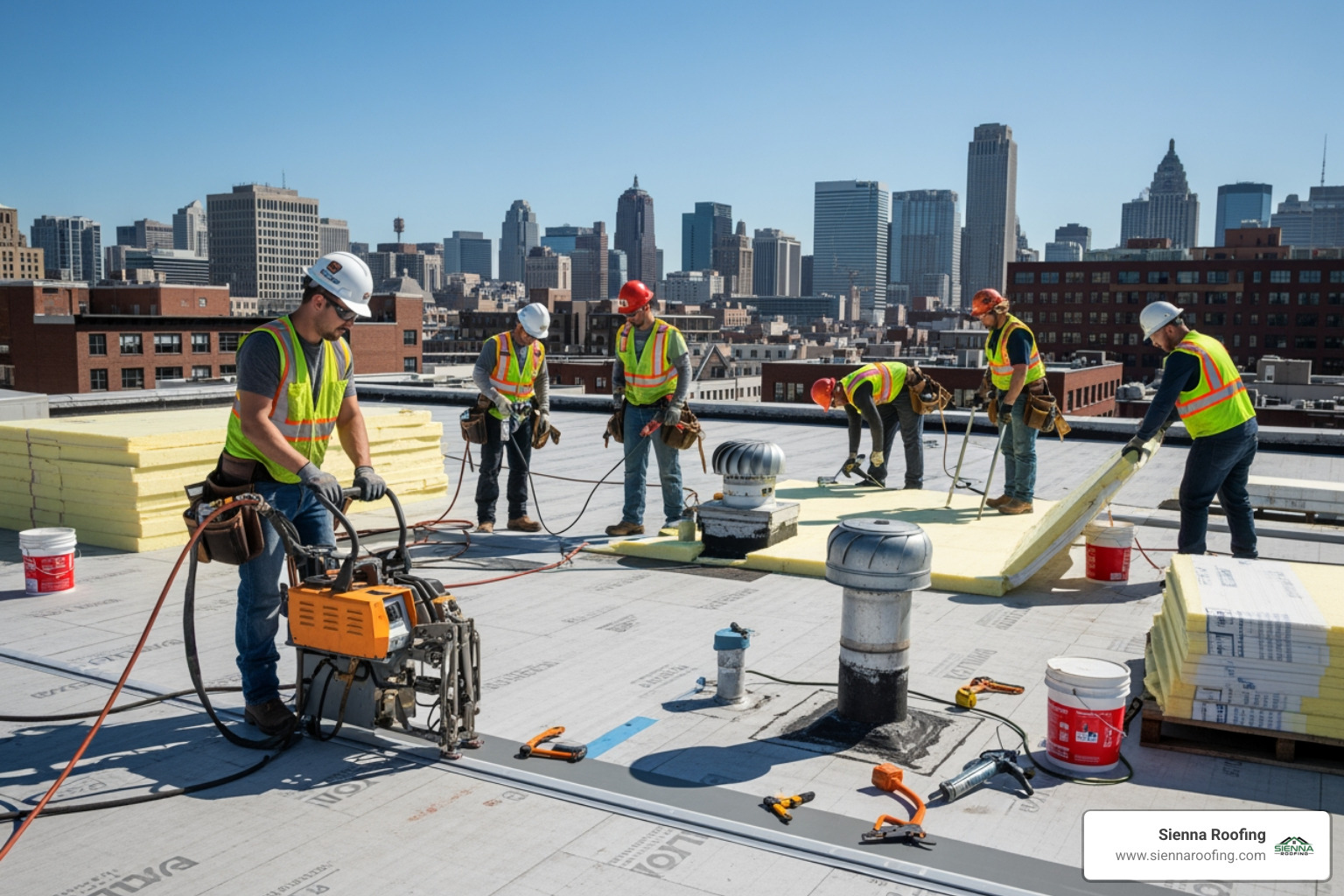
Your commercial roof is a complex, dynamic system that requires a complete lifecycle approach to management. We provide a full spectrum of services tailored for commercial roofing missouri city businesses, from rapid-response emergency repairs to meticulously planned replacements and proactive maintenance programs. Our primary goal is to maximize your roof’s lifespan and ensure your business operations continue without interruption. For a full list of our solutions, visit our Commercial Roofing Services page.
3.1 Early Warning Signs: When to Repair or Replace
Identifying and addressing problems early is the single most effective way to prevent minor issues from escalating into major capital expenditures. Business owners and facility managers should be vigilant for these key warning signs:
- Interior Water Damage: Water stains on ceiling tiles, discoloration on walls, or active drips are late-stage indicators of a significant breach in the roofing system. By the time you see water inside, the problem has likely existed for some time.
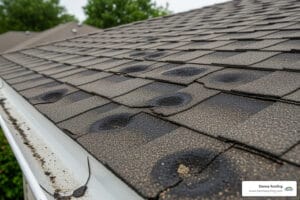
- Membrane and Surface Issues: Visually inspect the roof surface for punctures from debris, tears, cracks (especially in older asphalt-based roofs), and blisters or bubbles, which indicate trapped moisture or air between roof layers. Also look for exposed seams or fasteners.
- Failed or Damaged Flashing: The metal or membrane seals around HVAC units, vents, pipes, and at the roof edges (perimeter flashing) are the most common failure points. Look for flashing that is loose, bent, rusted, or has sealant that is cracked and pulling away.
- Ponding Water: Any area where water remains for more than 48 hours after rainfall is a critical red flag. This indicates a structural or drainage issue that adds weight, accelerates material degradation, and creates a prime environment for leaks.
- Unexplained Rise in Energy Bills: A sudden, sustained increase in your cooling costs can mean that your roof’s insulation has become wet and lost its R-value, or that the reflective surface has degraded and is now absorbing more heat.
If you notice any of these signs, a professional inspection is crucial to diagnose the root cause and determine whether a targeted repair, a restoration coating, or a full replacement is the most cost-effective long-term solution.
3.2 The ROI of Proactive Roof Maintenance
According to industry data, businesses that invest in a structured, proactive roof maintenance program spend significantly less on their roofs over time compared to those who react only to emergencies. A maintenance plan pays for itself many times over by extending your roof’s functional lifespan, preventing costly operational disruptions, and maintaining warranty compliance.
A comprehensive maintenance program should include:
- Semi-Annual Inspections (Spring & Fall): A thorough check of the entire roof surface, seams, flashing, and penetrations.
- Debris Removal: Clearing leaves, branches, and other debris that can clog drains and trap moisture against the roof surface.
- Drainage System Cleaning: Ensuring all gutters, scuppers, and internal drains are clear and functioning correctly to prevent ponding water.
- Minor Repairs: Proactively sealing small cracks, reinforcing loose fasteners, and repairing minor flashing issues before they allow water intrusion.
Addressing a small crack or loose flashing might cost a few hundred dollars. Waiting until that flaw causes a major leak can lead to tens of thousands in damages to the roof system, insulation, structure, and interior assets. A properly maintained roof can last 30-50% longer than a neglected one, maximizing the return on your initial investment.
3.3 Navigating a Full Roof Replacement
When a roof reaches the end of its serviceable life or sustains irreparable damage, a full replacement is the only viable path forward. A professional, well-managed replacement process is designed to minimize disruption to your business operations:
- Thorough Assessment & Planning: We conduct a comprehensive inspection of the existing roof, including core sampling to analyze the underlying layers and deck condition. This informs a detailed scope of work and project plan.
- Material Selection & Procurement: We work with you to select the optimal roofing system (TPO, Metal, etc.) for your building’s needs and budget, then procure all necessary materials.
- Permit Acquisition & Code Compliance: We handle all necessary paperwork and coordination with Missouri City officials to ensure the project is fully permitted and compliant with all local building codes.
- Site Safety & Preparation: We establish a clear safety plan, protect the surrounding property and access points, and coordinate material staging.
- Safe Removal & Deck Repair: The old roofing materials are carefully removed and disposed of. The underlying structural deck is then inspected and repaired or replaced as needed to create a solid, reliable foundation.
- New System Installation: Our certified team installs the new roofing system—insulation, membrane, flashing, and accessories—to the exact specifications of the manufacturer, ensuring warranty compliance.
- Final Inspection & Cleanup: A final walkthrough is conducted to ensure every detail meets our quality standards. We then perform a thorough cleanup, leaving your property pristine.
Expert project management is the key to a smooth, on-time, and on-budget replacement. We maintain clear communication throughout the process to ensure your business can continue operating with minimal impact. For a comprehensive assessment, call us at (832) 742-9928.
Section 4: How to Select the Best Commercial Roofing Contractor in Missouri City

The contractor you choose for your roofing project is the single most important factor in determining whether your new roof becomes a long-term, reliable asset or a recurring, costly liability. Making a decision based solely on the lowest price is a common mistake that often leads to substandard work, premature failure, and expensive repairs down the road. Here’s what truly matters when selecting a commercial roofing missouri city partner.
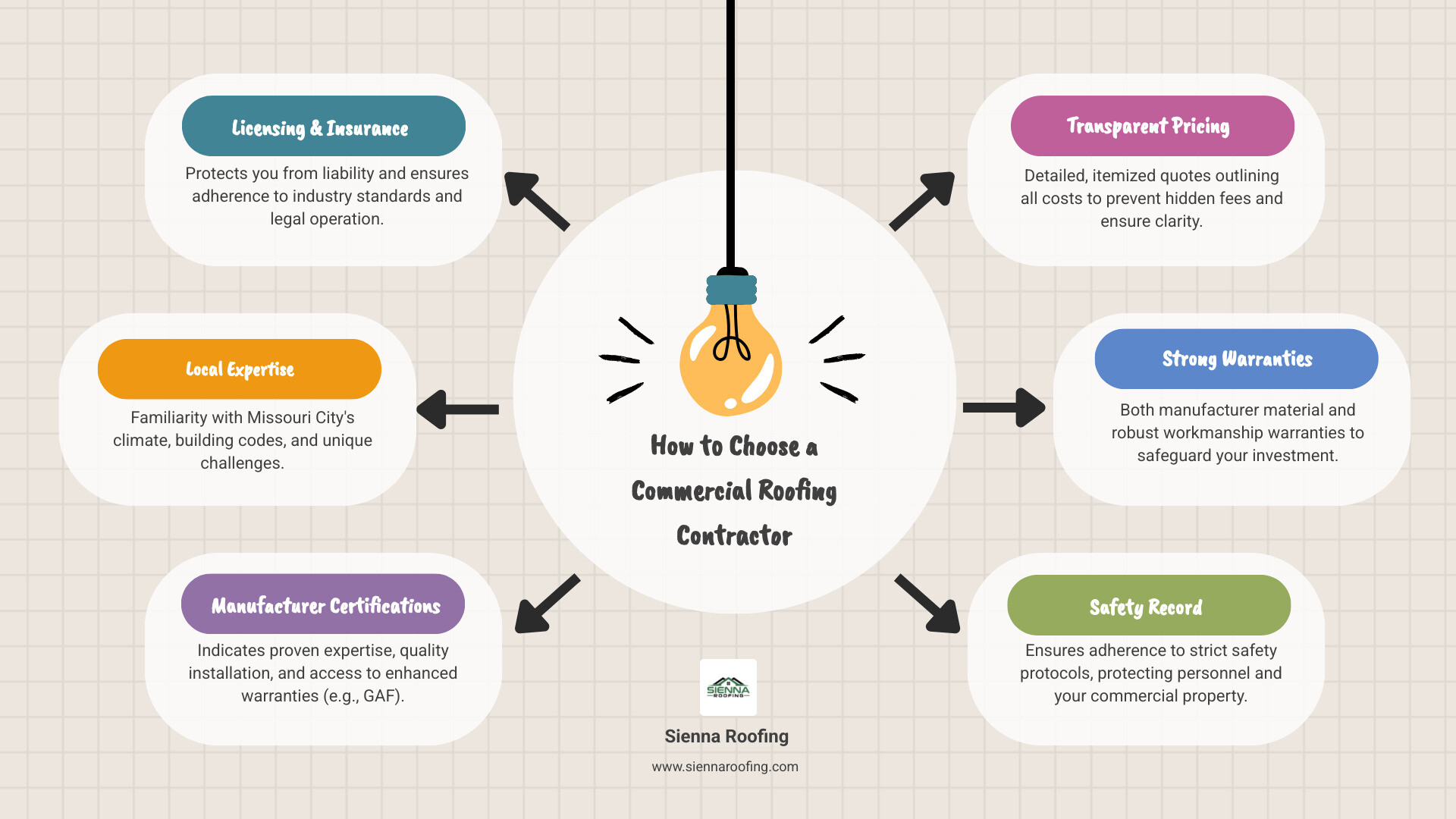
Key Selection Criteria: Licensing, Insurance, Local Experience, Manufacturer Certifications, Warranties, Customer Reviews, and Safety Record.
4.1 Credentials and Local Expertise Matter
At a minimum, any contractor you consider must be properly licensed by the state and carry comprehensive insurance. This is non-negotiable and protects your business from significant financial and legal liability. Ask for proof of:
- General Liability Insurance: To cover any damage to your property during the project.
- Worker’s Compensation Insurance: To cover any injuries to the contractor’s crew while on your property.
Beyond these basics, genuine local experience is what separates an adequate contractor from a great one. A true local expert understands Missouri City’s specific building codes, permitting processes, and climate challenges—from our 51 inches of annual rainfall to the stringent wind uplift requirements for the Gulf Coast. Our team at Sienna Roofing brings over 20 years of dedicated experience in the Greater Houston area, ensuring every project is engineered and built to last in our unique environment.
4.2 The Value of Manufacturer Certifications
Certifications from leading roofing manufacturers like GAF, Carlisle, Firestone, and Johns Manville are a powerful indicator of a contractor’s quality and stability. These are not easy to obtain. Manufacturers grant these credentials only to contractors who have undergone extensive factory training, demonstrated a history of high-quality installations, and proven their financial stability.
Choosing a certified contractor provides two critical advantages:
- Quality Assurance: It confirms the installer is an expert in the specific system being installed.
- Enhanced Warranties: Certified installers are often able to offer premium, extended warranties (like NDL or “No Dollar Limit” warranties) that cover both materials and workmanship directly from the manufacturer. This provides a level of comprehensive, long-term protection that non-certified installers simply cannot match. It is verifiable quality assurance backed by the industry’s most trusted names.
4.3 Transparent Pricing and Strong Warranties
The lowest bid is rarely the best value. A quality, professional proposal should include a detailed, itemized breakdown of all anticipated expenses—materials, specific labor tasks, tear-off and disposal fees, permits, and supervision. This transparency allows for an honest, apples-to-apples comparison between contractors and protects you from unexpected charges.
Equally important are the warranties offered. A comprehensive roofing warranty should always have two distinct parts:
- Manufacturer Material Warranty: This covers defects in the roofing products themselves.
- Contractor Workmanship Warranty: This is the installer’s guarantee on the quality of their installation work. A contractor who is confident in their process will offer a strong, clear, and long-term workmanship warranty.
We stand behind every project with robust workmanship warranties, putting our commitment to quality in writing and providing you with genuine, lasting peace of mind.
Section 5: Frequently Asked Questions about Commercial Roofing in Missouri City
We understand that commercial roofing missouri city business owners and property managers have specific, practical questions. Here are detailed answers to the most common inquiries we receive:
What do Missouri City building codes require for commercial roofs?
Missouri City, like other municipalities in the region, enforces building codes based on the International Building Code (IBC) with specific amendments for our local climate. Key requirements include:
- Wind Uplift Resistance: Roofs must be designed and fastened to withstand high wind speeds characteristic of the Gulf Coast region, following standards like ASCE 7. This dictates the specific fastening patterns and materials used, especially at perimeters and corners. For detailed information on Texas-specific requirements, the Texas Department of Insurance provides extensive resources on windstorm building codes.
- Drainage Systems: Codes mandate a minimum roof slope (typically 1/4″ per foot) and adequate drainage capacity to prevent ponding water, which is critical given our 51 inches of annual rainfall.
- Fire Resistance: Roofing materials must meet specific fire classification standards (e.g., Class A, B, or C) depending on the building’s type and occupancy to ensure public safety.
- Energy Efficiency: Newer codes may include provisions for minimum insulation R-values or the use of reflective “cool roof” surfaces to reduce energy consumption.
A licensed, experienced local contractor is essential to navigate these complex requirements and ensure your project is fully compliant.
What is the average cost for a commercial roofing project in Missouri City?
The average cost for a full commercial roof replacement in the Houston and Missouri City area typically ranges from $7 to $15 per square foot. This is a broad range because the final price is influenced by many factors:
- Material Choice: High-performance materials like standing seam metal or 80-mil TPO will cost more than standard modified bitumen or 45-mil TPO.
- Roof Size and Complexity: Larger roofs have a lower cost per square foot, but roofs with numerous penetrations (HVAC units, vents, skylights) require more detailed labor and will cost more.
- Condition of the Existing Roof: If a full tear-off of multiple old roof layers is required, or if the underlying structural deck needs significant repair, the cost will increase.
- Access and Logistics: A building with difficult roof access may require a crane or specialized equipment, adding to the project cost.
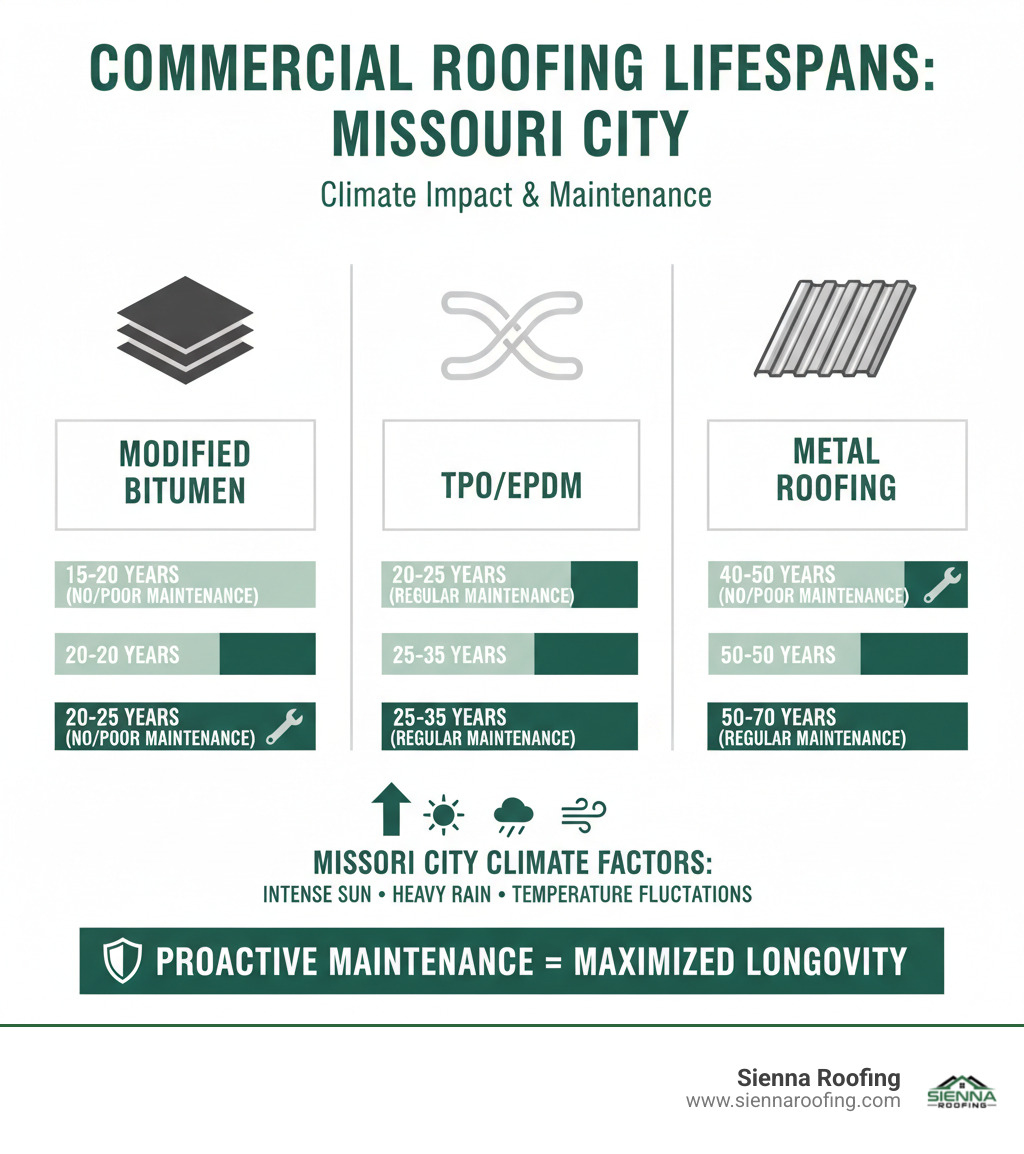
How long does a commercial roof last in Missouri City’s climate?
Lifespan is determined by three factors: the quality of the material, the quality of the installation, and the consistency of proactive maintenance. With professional installation and regular care, you can realistically expect:
- Modified Bitumen: 15–25 years
- TPO/EPDM: 20–35 years
- Metal Roofing: 40–70 years
Regular maintenance is the key to achieving the maximum potential lifespan, especially in our region’s harsh climate of intense sun, heavy rain, and high humidity.
Is a roof coating a good option for my building?
A roof coating or restoration system can be an excellent and cost-effective option, but only if the existing roof is a suitable candidate. It is a good choice if your roof’s primary issues are age-related degradation, minor leaks, or poor energy efficiency, but the underlying insulation and structure are still dry and sound. A coating is not a solution for a roof with extensive wet insulation, major structural problems, or multiple layers of old roofing that need to be removed. A thorough inspection with moisture-detection tools is necessary to determine if your roof qualifies for restoration.
Section 6: Partner with Missouri City’s Trusted Commercial Roofing Experts
Protecting your commercial property in Missouri City requires more than just a new roof—it demands a strategic partnership with a local expert who intimately understands the area’s unique climatic and regulatory challenges. Your roof is a significant capital asset, and its performance directly impacts your bottom line, from energy bills and repair costs to the safety of your employees and the continuity of your operations.
By making an informed decision on materials, committing to a proactive maintenance schedule, and, most importantly, choosing a qualified, insured, and certified contractor, you ensure your business is shielded from the elements and positioned for long-term success. This guide has outlined the critical factors to consider, from the intense Texas sun and heavy rainfall to the nuances of TPO, metal, and modified bitumen systems. Now is the time to put that knowledge into action.
For a comprehensive, no-obligation roof assessment and a detailed proposal tailored to your specific needs, partner with the team that has been protecting Houston-area businesses for over two decades. Connect with your local Missouri City roofing expert at Sienna Roofing today to schedule a consultation and secure the future of your property.