Roof Repair: Essential 5 Signs to Protect Your Business
Why Commercial Roof Repair Demands Immediate Attention
Roof repair for commercial properties is not optional—it’s essential business protection. When your business roof shows signs of damage, understanding your repair options can save you thousands of dollars and prevent operational shutdowns. For businesses in the Houston Metro area, partnering with a trusted local roofing company is critical to maintaining business continuity amid severe weather threats like hailstorms and hurricanes.
Quick Answer: Essential Commercial Roof Repair Options
- Minor Repairs ($150-$1,000): Single membrane patches, fastener replacements, minor flashing fixes.
- Moderate Repairs ($1,001-$2,000): Multiple leak repairs, drainage system fixes, extensive sealant work.
- Major Repairs ($2,001-$8,000): Large membrane sections, structural deck repairs, complete flashing systems.
- Full Replacement ($5,000-$16,000+): When damage exceeds 30% of the roof area or the system is past its lifespan.
Most Common Commercial Repairs:
- Membrane punctures and tears (flat roofs)
- Flashing failures around HVAC units and penetrations
- Pooling water and drainage issues
- Seam separation on TPO, EPDM, or PVC systems
Ignoring early warning signs can lead to catastrophic failures costing $8,000 or more, not to mention the price of business interruption and damaged inventory. Commercial roofs face unique challenges that residential systems don’t, from ponding water on flat designs to stress points from heavy HVAC equipment. Understanding these vulnerabilities helps you act before small issues spiral into major liabilities. A timely commercial roof repair is a critical investment in your business’s stability and longevity.
Identifying the Red Flags: When Does Your Commercial Roof Need Attention?
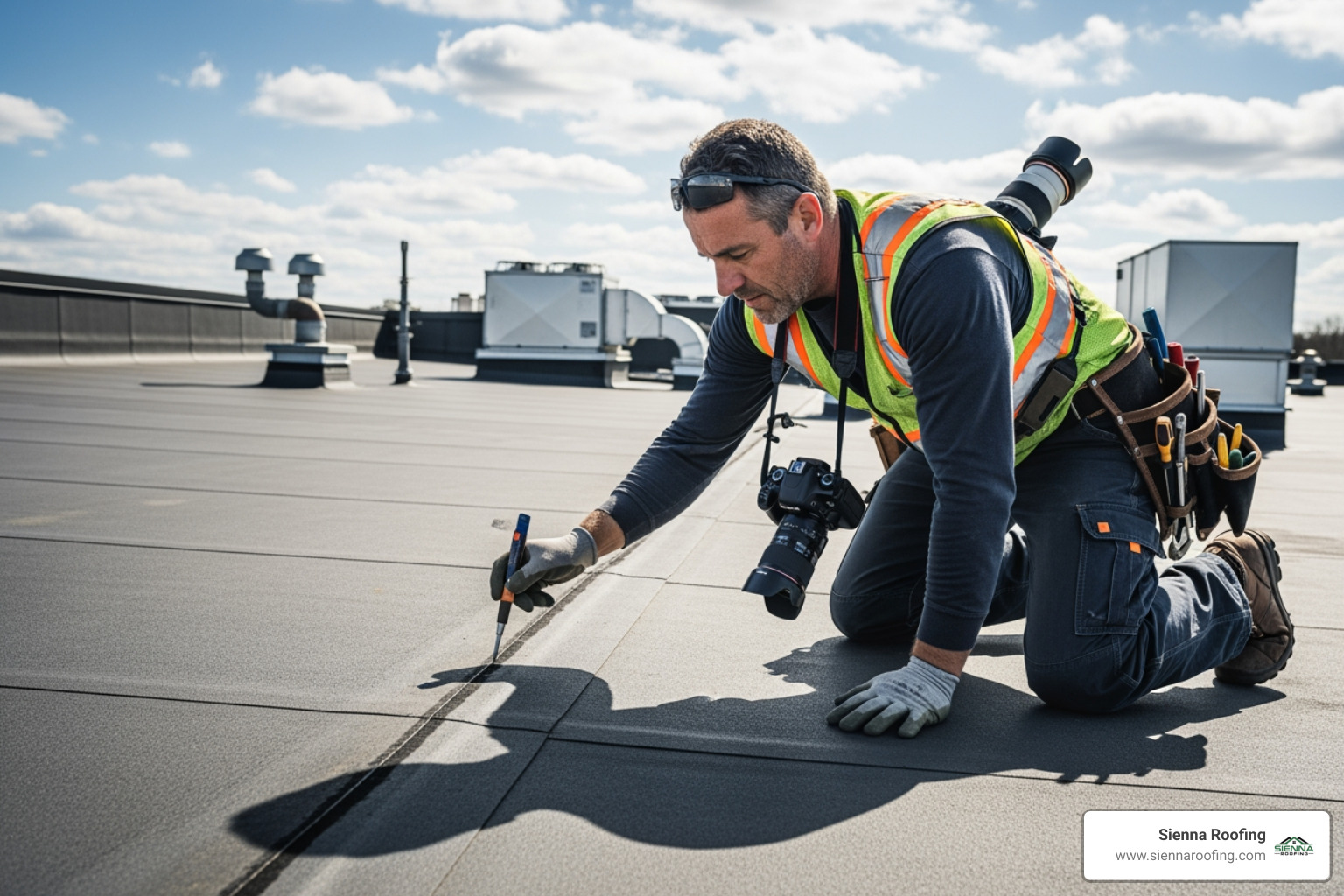
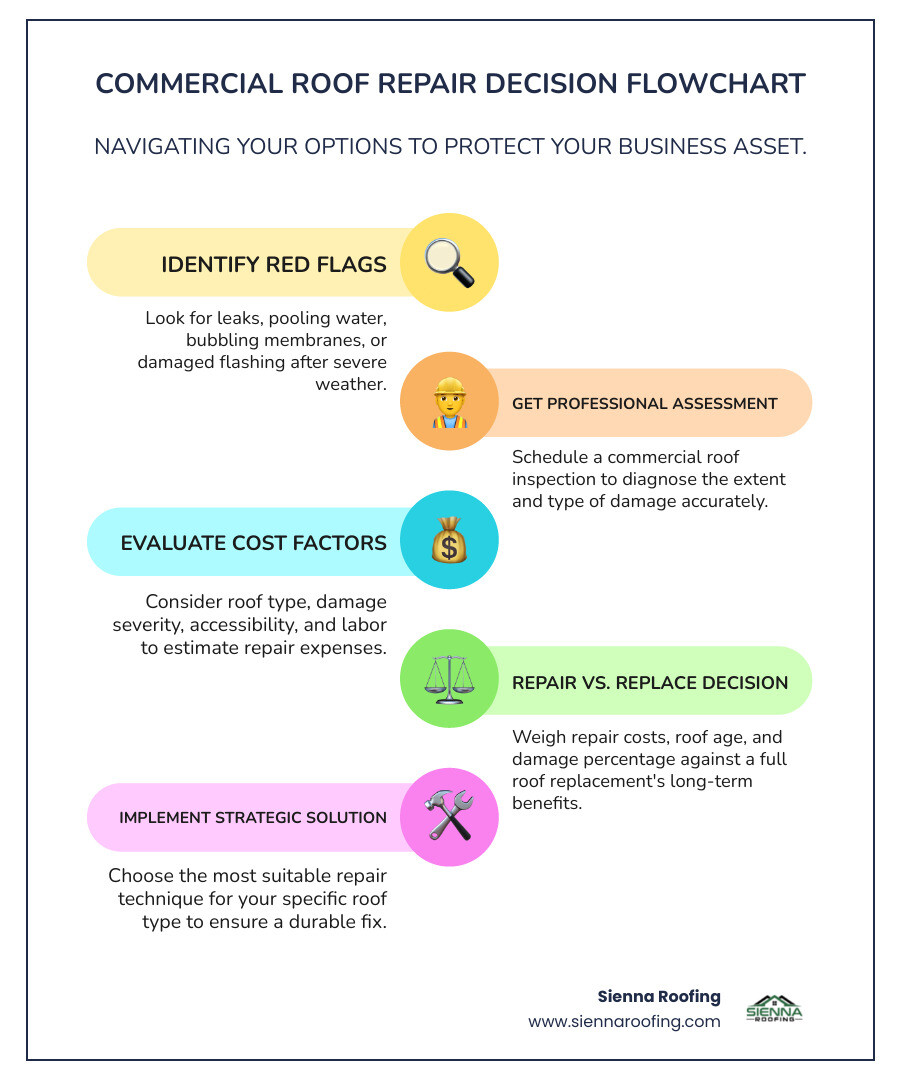
Catching problems early is the difference between a simple fix and a business-disrupting disaster. Your roof provides clear warning signs if you know what to look for. Regular inspections, especially after severe weather, are your best defense against costly repairs. For businesses in Sugar Land, Missouri City, and Richmond, TX, where storms test every roof, vigilance is essential.
Common Signs of Commercial Roof Damage
- Water Stains on Ceilings: Discoloration, damp spots, or peeling paint on interior ceilings or walls are the most obvious signs of a roof leak. Do not underestimate them. The entry point on the roof may be far from the visible stain, as water can travel along roof decking, insulation, and structural beams before finding a place to drip. This lateral movement makes pinpointing the source a challenge for an untrained eye. A professional will trace the path of moisture, often using tools like infrared cameras that can detect temperature differences caused by trapped water, to find the exact point of failure on the roof’s surface.
- Pooling Water: On flat or low-slope roofs, any water that remains for more than 48 hours after rainfall is known as “ponding water” and signals a serious drainage problem. This could be due to clogged drains, insufficient slope, or structural sagging. The weight of standing water is substantial—just one inch of water weighs over 5 pounds per square foot. This constant load puts immense stress on the roof structure and accelerates the deterioration of the roofing membrane, leading to premature failure and leaks.
- Membrane Damage: Bubbles, blisters, cracks, or visible punctures and tears on flat roofs signal that the surface has been compromised. Bubbles and blisters indicate that moisture or air is trapped between membrane layers, which will expand in the heat and eventually rupture. Cracks often appear as the material ages and becomes brittle. Punctures from foot traffic or debris create a direct path for water intrusion. All of these issues require immediate attention to prevent water from saturating the underlying insulation and decking.
- Damaged Flashing and Sealants: Flashing is the metal or membrane material used to seal the roof at penetrations like vents, skylights, HVAC units, and walls. Cracked sealant or bent, rusted, or loose flashing are critical failure points. These components are designed to direct water away from the most vulnerable areas of your roof; when they fail, leaks are almost certain. A thorough inspection should always include a close look at all flashing and sealant joints.
- Clogged Drains: If gutters, scuppers, and internal drains are blocked with leaves, dirt, or other debris, water cannot escape the roof. It will back up, pool in unintended areas, and potentially seep under the roofing membrane at the edges. This is one of the most common and easily preventable causes of major roof damage, highlighting the importance of routine maintenance.
If you notice these signs, don’t wait. Schedule a professional assessment to get an accurate diagnosis before the problem escalates.
Damage Specific to Weather Events
Operating in the Houston Metro area means preparing for specific weather-related threats that demand a swift response.
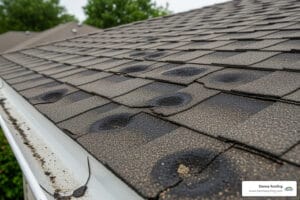
- Hail Damage: Hail can cause both cosmetic and functional damage. It can crack or shatter membranes, create deep indentations (bruises) that weaken the material, or strip away the protective granules from modified bitumen or shingled roofs. This exposes the underlying material to rapid UV degradation. After a hailstorm, it’s crucial to have a professional determine if the damage has compromised the roof’s waterproofing capabilities, as this distinction is critical for insurance claims. Repairs for hail damage typically cost between $700 and $4,000.
- Wind Uplift: Strong winds from hurricanes or severe thunderstorms create powerful negative pressure, especially at the corners and perimeter of a roof. This force can lift the roofing material, peeling it back and breaking the seals. Once the wind gets underneath the membrane, it can tear off large sections, leaving the building’s interior completely exposed to rain.
- Storm Debris: High winds carry debris that can act like projectiles. Large branches can cause obvious punctures and structural damage. Even smaller debris can clog drains, scour the roof surface, and trap moisture, which accelerates deterioration long after the storm has passed.
- UV Degradation: The intense Texas sun is a relentless force. Over time, ultraviolet radiation breaks down the chemical bonds in roofing materials, making them brittle, prone to cracking, and less flexible. EPDM can shrink and pull away from flashing, while the protective oils in asphalt-based products can dry out. This slow, steady damage can compromise your entire roof system if not addressed with protective coatings or regular maintenance.
When severe weather strikes, quick action protects your business. Learn how to handle storm damage promptly to minimize disruption.
Decoding the Dollars: Key Factors in Commercial Roof Repair Costs

Understanding the cost of a commercial roof repair isn’t straightforward, with prices ranging from $392 to $1,913 for common issues and potentially exceeding $8,000 for major work. For business owners in Sugar Land, Missouri City, and Richmond, knowing what drives these costs helps you budget wisely.
Breaking Down the Average Cost of a Commercial Roof Repair
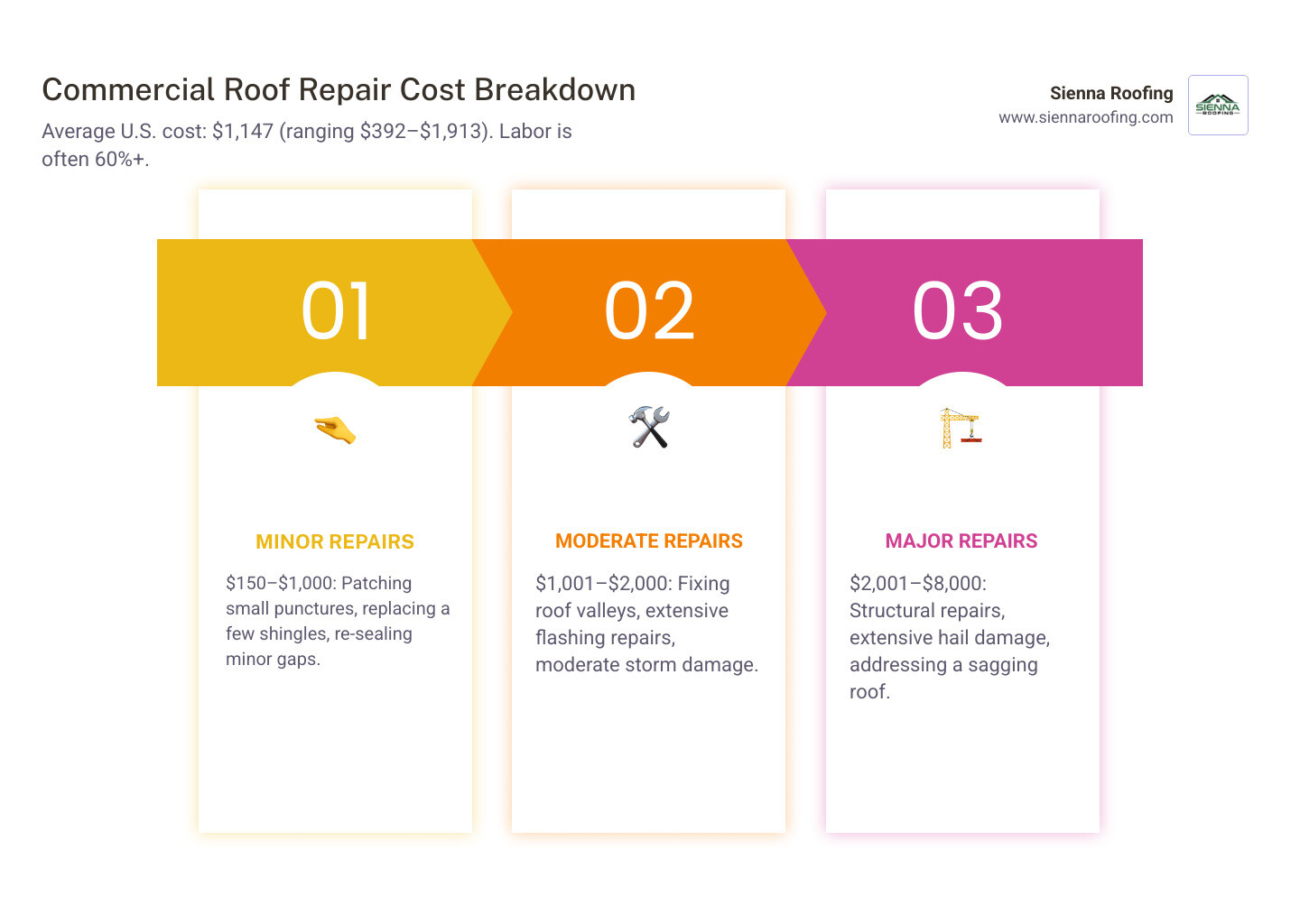
The average commercial roof repair costs $1,147, but this figure varies based on the severity of the damage.
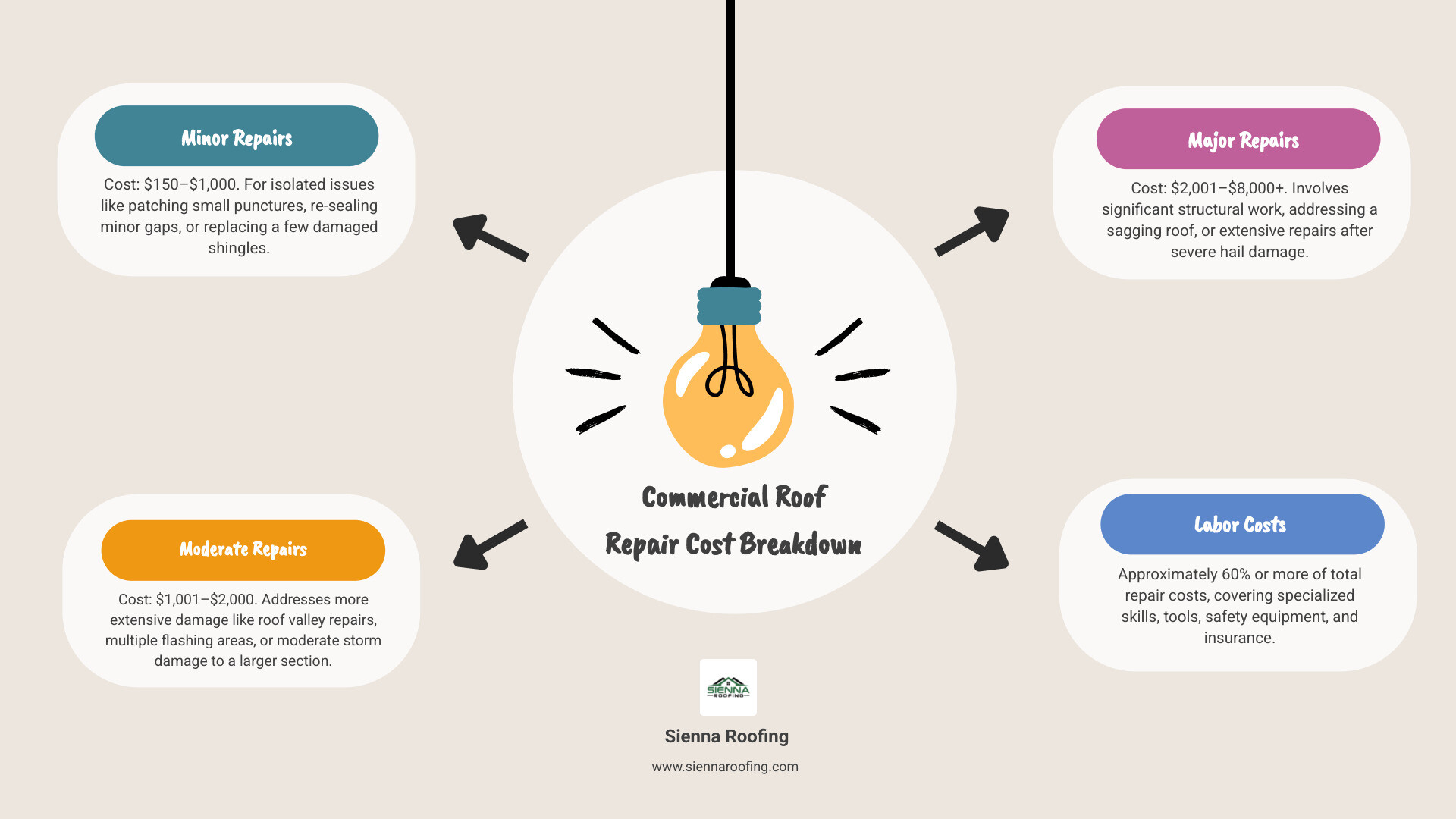
- Minor Repairs ($150 – $1,000): This covers isolated issues like patching a small membrane puncture, replacing a few missing shingles, or sealing a single vent.
- Moderate Repairs ($1,001 – $2,000): This tier includes more extensive work, such as repairing a roof valley ($300 – $1,000), fixing flashing around a chimney ($200 – $500), or addressing storm damage affecting a larger section.
- Major Repairs ($2,001 – $8,000): These projects involve significant intervention, such as repairing roof trusses ($500 – $5,000), fixing a sagging roof deck ($1,500 – $7,000), or addressing widespread hail damage ($700 – $4,000).
Labor typically accounts for 60% or more of the total cost, covering specialized skills, safety equipment, and essential insurance like liability and workers’ compensation. Permit costs can add another $75 to $250 for more extensive jobs.
How Roof Type and Design Impact Your Bottom Line
Your roof’s material and design are major cost factors. Flat roofs (TPO, EPDM, PVC) are common for commercial buildings, and while patching is straightforward, locating a leak can be complex. Pitched roofs have varying costs; asphalt shingles are the most budget-friendly to repair, while metal, tile, or slate roofs require specialized techniques and command higher prices.
Roof accessibility and complexity also influence the final bill. A steep, complex roof with numerous vents, skylights, and dormers requires more time, skill, and safety precautions, increasing labor costs compared to a simple, easily accessible roof. Understanding these variables highlights why your roof is a critical business asset that needs expert attention.
Hidden Costs and How to Save Money on Your Roof Repair Project
The most significant hidden cost is often water damage to insulation or decking. By the time a leak is visible inside, moisture may have already compromised the underlying roof structure, leading to rot and requiring repairs that can cost $500 to $5,000 or more.
The most effective way to save money is through regular maintenance. Fixing a minor issue like a cracked sealant early might cost $150, but letting it fester can lead to major structural repairs costing thousands. When repairs are needed, obtaining multiple quotes helps ensure fair pricing. However, be wary of unusually low bids, as they may indicate cut corners or inadequate insurance. Finally, insisting on industry best practices for repairs ensures a durable fix, preventing repeat issues and saving money in the long run.
Strategic Solutions: Common Repair Options for Commercial Properties
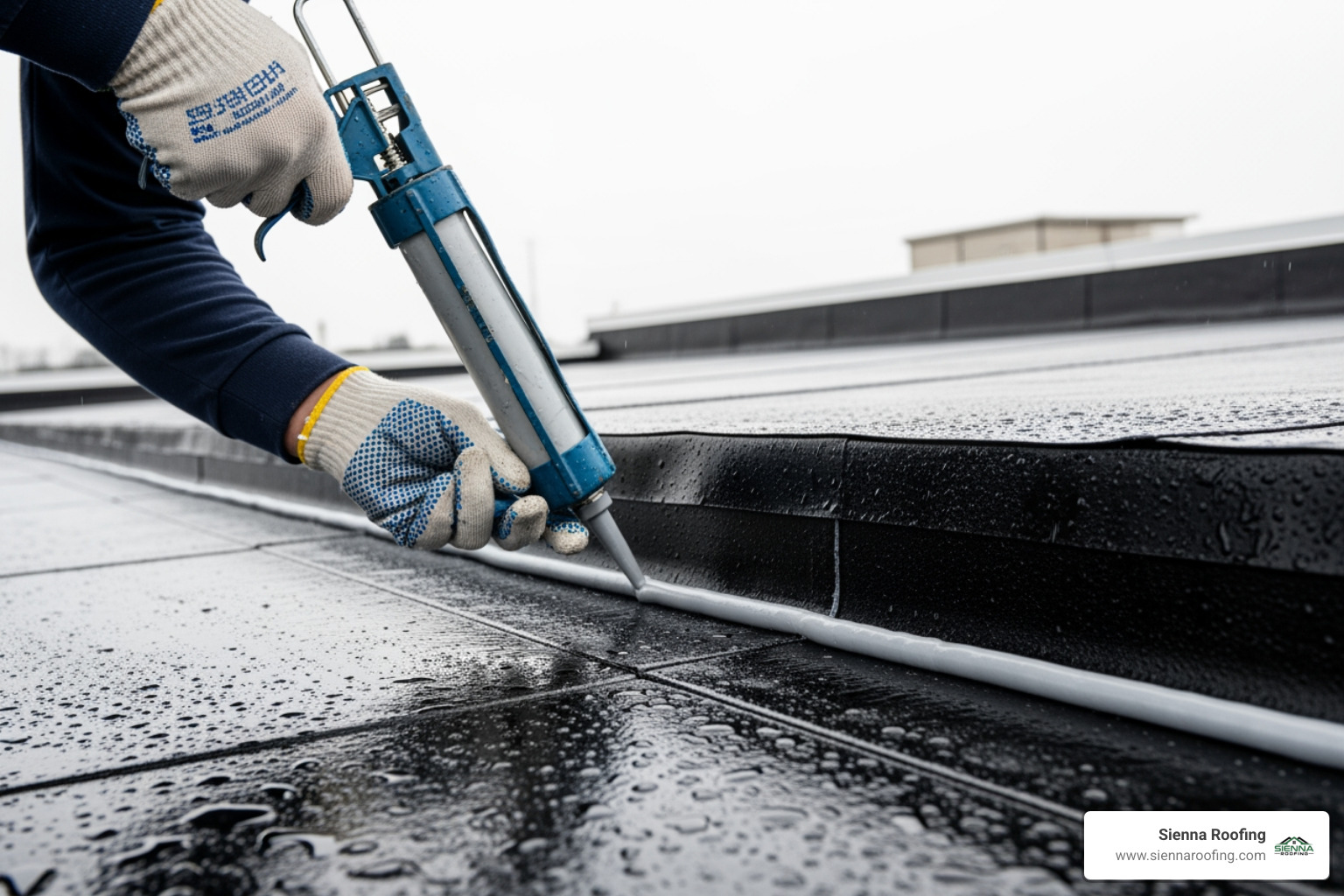
Different commercial roofing systems require specialized repair techniques. Understanding the right solution for your property ensures a durable, long-lasting fix that protects your business operations. Whether you have a sprawling flat roof or a distinctive pitched design, an expert team can implement the most effective roof repair strategies for your specific system.
Flat Roof Repair: Addressing Leaks, Blisters, and Membrane Damage
Flat roofs are the standard for commercial properties in the Houston area and require specialized attention to detail for effective repairs.
- Patching Punctures: For single-ply membranes like TPO, EPDM, or PVC, a puncture from dropped tools, foot traffic, or storm debris is a common issue. A professional roof repair involves more than just applying sealant. The process includes thoroughly cleaning the damaged area to remove all dirt and oils, priming the surface to ensure maximum adhesion, and then applying a patch made of a compatible membrane material. For TPO and PVC, the patch is often heat-welded to the existing roof for a seamless bond. For EPDM, a specialized adhesive and seam tape are used. This meticulous process creates a permanent, watertight seal that integrates with the existing roof system.
- Sealing Open Seams: The seams where sheets of roofing material overlap are a primary vulnerability. Over time, UV exposure and thermal expansion/contraction can cause adhesives to fail or welds to weaken. For thermoplastic materials like TPO and PVC, technicians use a hot-air welder to melt the membrane at the seam and fuse the layers, creating a bond that is often stronger than the membrane itself. For thermoset materials like EPDM, the repair involves cleaning the old seam, applying a primer, and using specialized cover strips and seam tapes to create a new, durable seal. This is a critical roof repair for preventing widespread water intrusion.
- Repairing Blisters: Bubbles or blisters on a flat roof indicate trapped air or moisture. If ignored, they will expand and contract with temperature changes, eventually rupturing the membrane. The repair involves carefully slicing the blister open, allowing the trapped moisture to dry completely, and then re-adhering the loose membrane to the substrate. A reinforcement patch is then applied over the entire area to ensure a durable, long-term fix.
- Applying Restorative Coatings: For an aging roof with widespread surface cracking or granule loss but a sound structure, a liquid-applied restorative coating can be a cost-effective alternative to a full replacement. Silicone and acrylic coatings are popular choices. They are applied over the entire roof surface, creating a seamless, monolithic, and waterproof barrier. These coatings are often highly reflective (“cool roofs”), which can lower roof temperatures, reduce energy consumption, and extend the roof’s service life by 10-15 years.
- Fixing Drainage Systems: Effective drainage is non-negotiable. Repairs often involve more than just clearing clogged drains and scuppers. A professional will inspect for structural sagging that may be causing ponding water and may recommend installing tapered insulation to improve the slope. Repairing or replacing damaged drain bowls, scuppers, and gutters ensures water is efficiently channeled off the roof, preventing the damaging effects of standing water.
Understanding the nuances of various flat roof systems is critical to performing lasting repairs that maintain the roof’s integrity and any manufacturer warranties.
Pitched Roof Repair: Solutions for Metal, Shingles, and Tile
Many businesses feature pitched roofs, which use different materials that each require a unique approach to roof repair.
- Replacing Damaged Shingles: Wind can lift and remove asphalt shingles, while hail can crack them or cause significant granule loss. A professional repair involves carefully breaking the sealant on the surrounding shingles, removing the nails from the damaged shingle, sliding it out, and installing a new one in its place. The new shingle is nailed according to manufacturer specifications and sealed to the surrounding courses to restore the roof’s water-shedding capability.
- Securing Metal Panels and Fasteners: After a storm, metal panels can become loose from wind uplift. Technicians will re-secure these panels and, crucially, inspect the fasteners. The neoprene washers on screws are a common failure point, as they degrade under UV exposure, allowing water to seep in. Replacing these fasteners with new, oversized ones is a common and effective repair that prevents leaks and rattling.
- Repairing Flashing and Valleys: Damaged flashing around chimneys, vents, and skylights is a primary source of leaks on pitched roofs. Repairing these metal components often involves removing the surrounding roofing material, replacing or reforming the flashing, and applying new sealant. Valleys—the intersections where two roof planes meet—are critical channels for water. Repairing a valley may involve replacing the metal flashing and installing a new ice and water shield beneath it to ensure complete waterproofing.
- Replacing Cracked Tiles: Clay and concrete tiles are extremely durable but can crack from impact. Replacing individual tiles requires a delicate touch to avoid a chain reaction of breakage. An experienced professional will carefully lift the overlapping tiles, remove the broken one, and slide a new, matching tile into place, ensuring it is properly seated and secured. This is a job best left to experts due to the fragility and weight of the material.
Our goal is always to provide solutions that extend your roof’s life and protect your commercial investment from the top down.
Repair vs. Replace: Making the Smart Financial Decision for Your Business
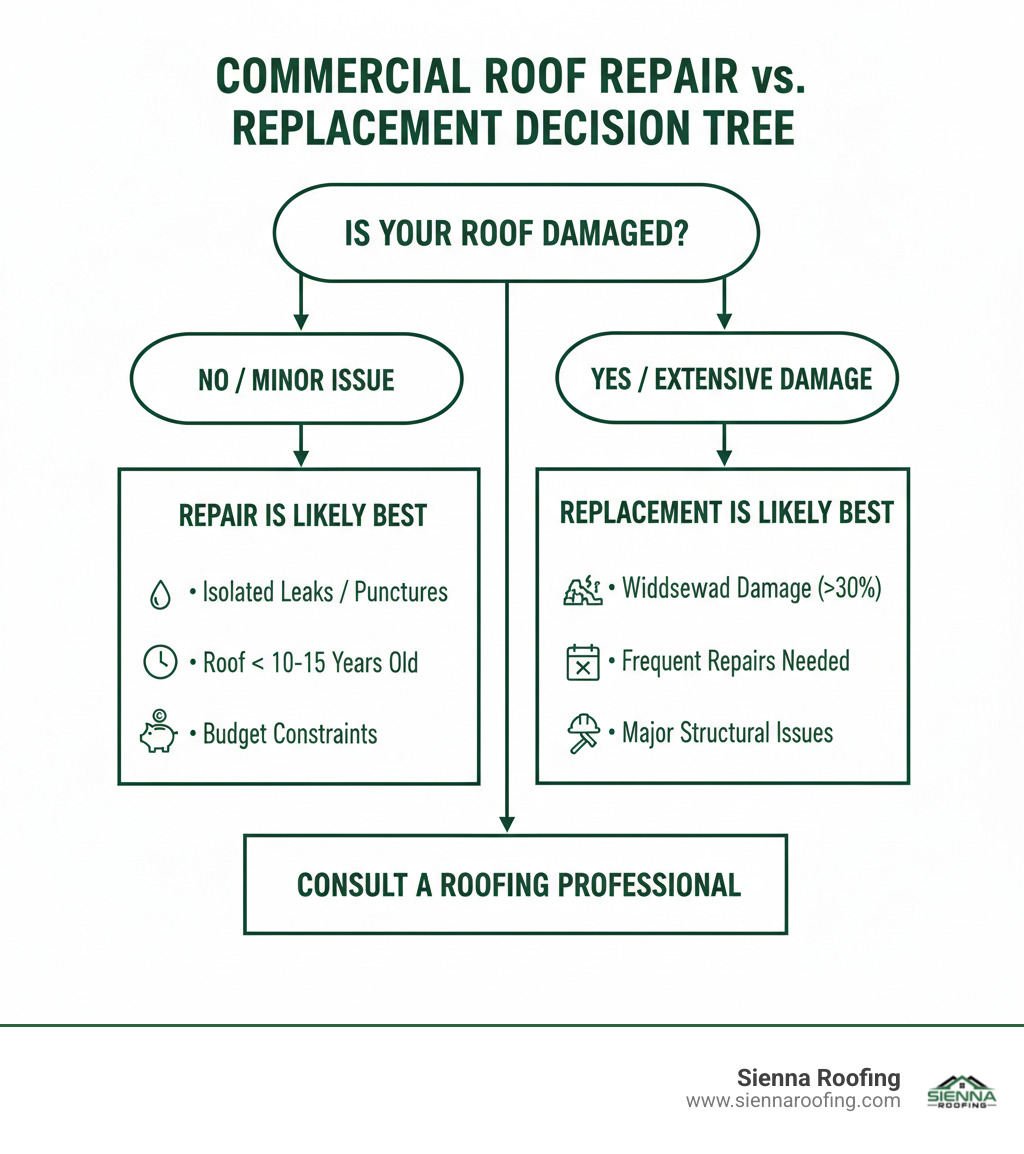
The decision to repair or replace a commercial roof is a significant financial calculation. If more than 30% of your roof is substantially damaged, or if it’s nearing the end of its lifespan (e.g., 15-20 years for many flat roofs), a full replacement, costing between $5,000 and $16,000+, often provides a better long-term return on investment.
When to Repair
Choosing to repair your commercial roof is the most cost-effective solution when the damage is localized and the roof is still in good condition overall.
- Isolated Damage: A single leak, a few damaged shingles, or a localized puncture are ideal candidates for a targeted roof repair.
- Younger Roof: If your roof is less than 10-15 years old and well within its expected lifespan, repairs are almost always the better financial choice.
- Budget Constraints: Strategic repairs can protect your assets and buy time until a full replacement is financially feasible.
- Minor Leaks: Small, easily traced leaks can be fixed promptly and affordably, preventing them from escalating into larger problems.
Our team is adept at providing effective and budget-friendly commercial roof repair solutions to keep your business protected.
When to Replace
There comes a point when ongoing repairs are no longer economical, and a full replacement becomes the smarter long-term decision.
- Widespread Damage: If damage covers more than 30% of the roof surface, a replacement ensures uniform, long-lasting protection.
- Frequent Repairs: If you are constantly calling for repairs, the cumulative cost likely justifies the investment in a new roof system.
- Age of Roof: Once a roof surpasses its expected lifespan (e.g., 15-30 years for asphalt, 30-50 for metal), even minor issues can signal systemic failure.
- Major Structural Issues: A sagging deck or compromised trusses indicate problems that simple repairs cannot fix. A replacement allows for a complete structural overhaul.
- Energy Efficiency Upgrade: A replacement is an opportunity to install modern, energy-efficient materials that can lower your utility bills for years to come.
While a significant investment, a new roof can protect your business for decades. For a detailed understanding of the process, consult our complete roof replacement guide.
Frequently Asked Questions about Commercial Roof Repair
We often hear similar questions from business owners in Sugar Land, Missouri City, and Richmond regarding their commercial roof repair needs. Here are some of the most common inquiries and our expert answers.
What is the most common type of commercial roof repair?
The most common repairs for commercial roofs, particularly flat roofs prevalent in our service areas, involve fixing leaks at seams, repairing punctures in the membrane, and addressing issues around flashing for vents, skylights, and HVAC units. These areas are inherently vulnerable points where the roof membrane is interrupted or joined, making them prime candidates for water intrusion. Regular inspections often reveal these issues before they become major leaks.
How long does a commercial roof repair take?
The duration of a commercial roof repair varies significantly based on the type and extent of the damage. Minor repairs, such as patching a small hole or replacing a few shingles, can take as little as a few hours. Moderate repairs, like addressing multiple leak points or a larger section of damaged membrane, might require 1-3 days. Major repairs involving structural components or extensive re-sealing can extend to several days, depending on the complexity and weather conditions. We always aim for efficient, minimally disruptive service to get your business back to full operation swiftly.
Can I perform commercial roof repairs myself?
DIY repairs on commercial roofs are strongly discouraged. The work is inherently dangerous, requiring specialized tools, safety equipment, and extensive knowledge of complex roofing systems and building codes. Attempting to fix your commercial roof yourself can lead to further damage, void manufacturer warranties, and, most critically, pose a significant safety risk to yourself and others. Professional roofers are trained to identify the root cause of issues, apply correct repair techniques, and ensure the work complies with all safety standards and regulations, protecting your property and investment.
Your Partner in Protecting Your Property
Your commercial roof is the guardian of your business operations. A timely, professional roof repair doesn’t just fix a problem—it protects your bottom line and provides peace of mind. By understanding the warning signs, cost factors, and strategic solutions, you can make confident decisions that safeguard your property for years to come.
For business owners across the Houston Metro area—including Sugar Land, Missouri City, and Richmond—having a trusted roofing partner is essential. At Sienna Roofing, we understand that your business is part of our community’s fabric. We treat every commercial project with the expertise and care it deserves, delivering solutions built to withstand the Texas climate.
We stand behind our work with a 100% satisfaction guarantee because we are committed to building long-term relationships with the businesses that make our community thrive. Our team thoroughly inspects your roofing system, identifies the root cause of any issues, and executes durable repairs. We don’t offer quick fixes; we provide lasting protection.
Don’t wait for a small leak to become a catastrophic failure that damages equipment and forces closures. If you’ve noticed any of the warning signs discussed, now is the time to act. Our team is here to provide an honest, expert assessment of your roof’s condition and recommend the most effective course of action for your budget and business needs.
Ready to protect your biggest business asset? Visit our commercial roof repair services page to schedule a comprehensive inspection. Let’s work together to ensure your roof keeps doing its job, so you can focus on doing yours.