Need a Roofer: 10 Crucial Signs & Expert Guide
Why Finding the Right Roofer Can Save You Thousands
When you need a roofer, the decision you make carries significant financial weight. Rushing the process or choosing an unqualified contractor can transform a necessary home improvement project into a cascade of costly mistakes. With the average U.S. roof replacement costing between $5,000 and $10,000—and often more for larger homes or premium materials—an informed choice is the single most important factor in protecting your home and your finances. A poorly installed roof can lead to chronic leaks, hidden structural rot, toxic mold growth, and a drastic reduction in your property’s value. This guide will equip you with the comprehensive knowledge to confidently navigate the entire process, from identifying the first subtle signs of trouble to hiring a trustworthy and highly skilled roofing contractor for your home. Statistics show that approximately 15% of homeowners undertake roof repairs or replacements annually; knowing precisely what to look for ensures you receive the best possible value, durability, and long-term protection.
Your roof is not just a layer of shingles; it’s a complex, integrated system. It includes the underlying wood deck, a protective underlayment, flashing to seal joints, and a ventilation system to manage heat and moisture. A failure in any one of these components can compromise the entire system. Therefore, hiring a roofer is about more than just nailing down shingles—it’s about entrusting an expert with the primary defense that shields your family and possessions from the elements.
Key Takeaways Before You Hire:
- Verify Credentials: This is your first line of defense against unqualified operators. Always confirm the contractor holds substantial general liability insurance to protect your property and workers’ compensation insurance to cover their employees. Ask for the policy numbers and verify them with the insurance provider. In states like Texas, where statewide licensing isn’t mandatory, look for voluntary certifications and a long-standing local presence.
- Get Multiple, Detailed Estimates: Don’t settle for a single quote. Obtain at least three written, itemized estimates from different reputable companies. A proper estimate should detail the scope of work, specific materials to be used (brand and type), labor costs, tear-off and disposal fees, and the project timeline. A suspiciously low bid is a major red flag, often indicating uninsured labor, substandard materials, or cut corners.
- Check Reputability and Local History: A contractor’s reputation is built over years of quality work. Scrutinize online reviews on platforms like Google, Yelp, and the Better Business Bureau. Look for consistent patterns in feedback regarding communication, punctuality, cleanup, and how they handled unexpected issues. Ask for local references—specifically, addresses of recent projects you can drive by and names of homeowners you can call.
- Know Your Needs: Repair vs. Replacement: Before you call, have a basic understanding of your situation. Is the damage isolated to a small area, or are you seeing multiple warning signs across the entire roof? Understanding the difference between a minor repair and a full replacement will help you have a more productive conversation with potential contractors.
- Confirm All Warranties in Writing: A quality roofing job is backed by two distinct warranties: a manufacturer’s warranty covering defects in the roofing materials and a contractor’s workmanship warranty covering installation errors. Ensure you receive and understand the terms of both in writing. Ask what actions could potentially void these warranties, such as installing satellite dishes or performing DIY repairs.
Making a smart choice isn’t just about comparing prices—it’s about investing in the long-term security and integrity of your home. A well-installed roof by a vetted professional is a shield that will perform reliably for decades to come.
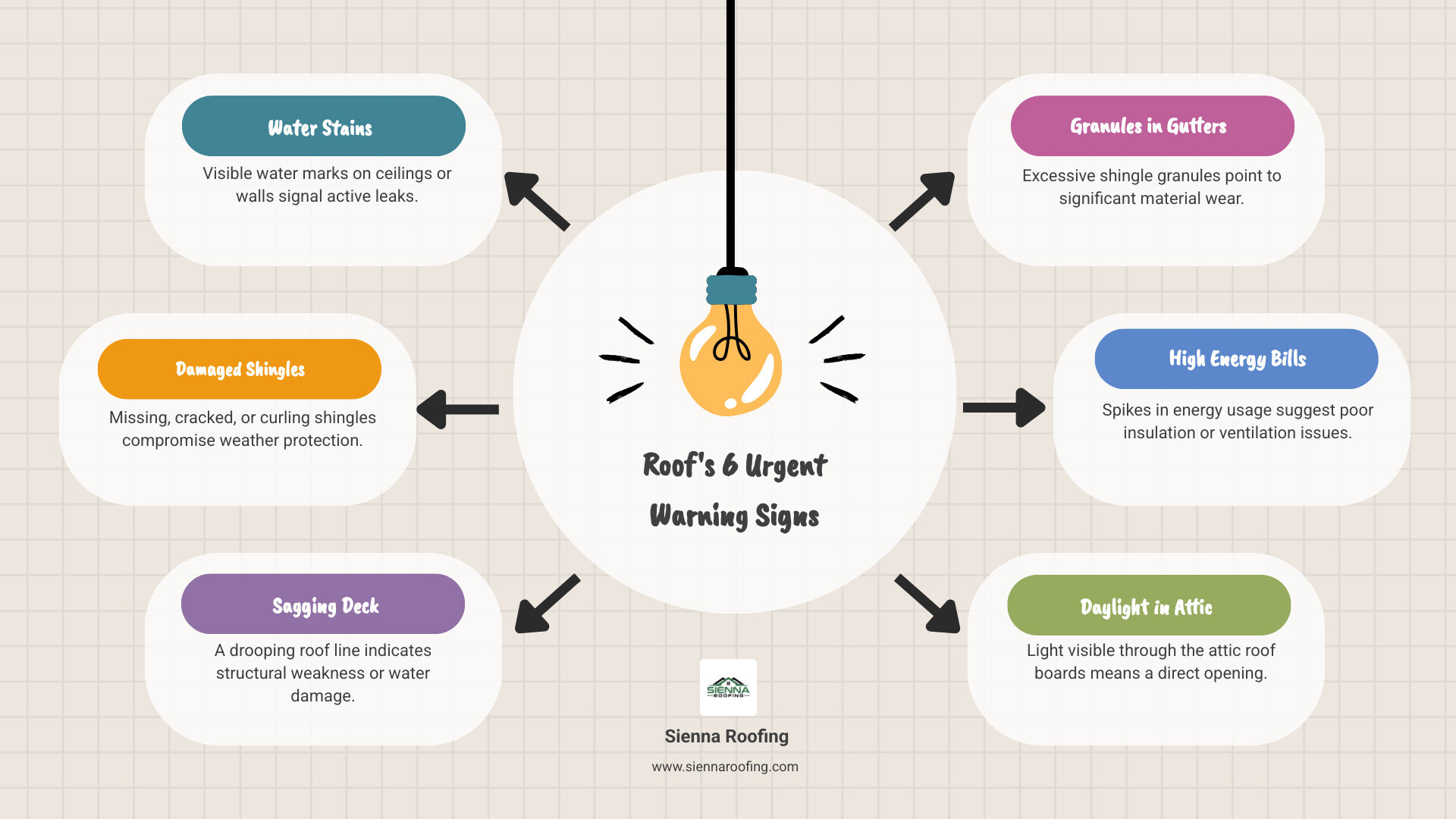
This infographic displays the 10 most common warning signs that indicate you need professional roofing help: 1) Water stains on ceilings or walls, 2) Missing or damaged shingles, 3) Granules in gutters, 4) Sagging roof deck, 5) Moss or algae growth, 6) Increased energy bills, 7) Damaged flashing, 8) Roof age over 20 years, 9) Daylight through attic boards, and 10) Blistering interior paint. Each sign includes a simple icon and a brief one-sentence explanation of why it matters.
10 Telltale Signs Your Roof is Crying for Help
Your roof provides constant, silent protection, but when it’s in distress, it sends out clear signals. A roof showing signs of advanced age—typically 20-25 years for standard asphalt shingles—or any visible damage requires an immediate professional inspection. Learning to recognize these warning signs empowers you to act proactively, saving you from the stress and immense expense of an emergency situation like a major interior leak or structural failure.
Here are the ten definitive signs that you need a roofer to perform a thorough assessment:
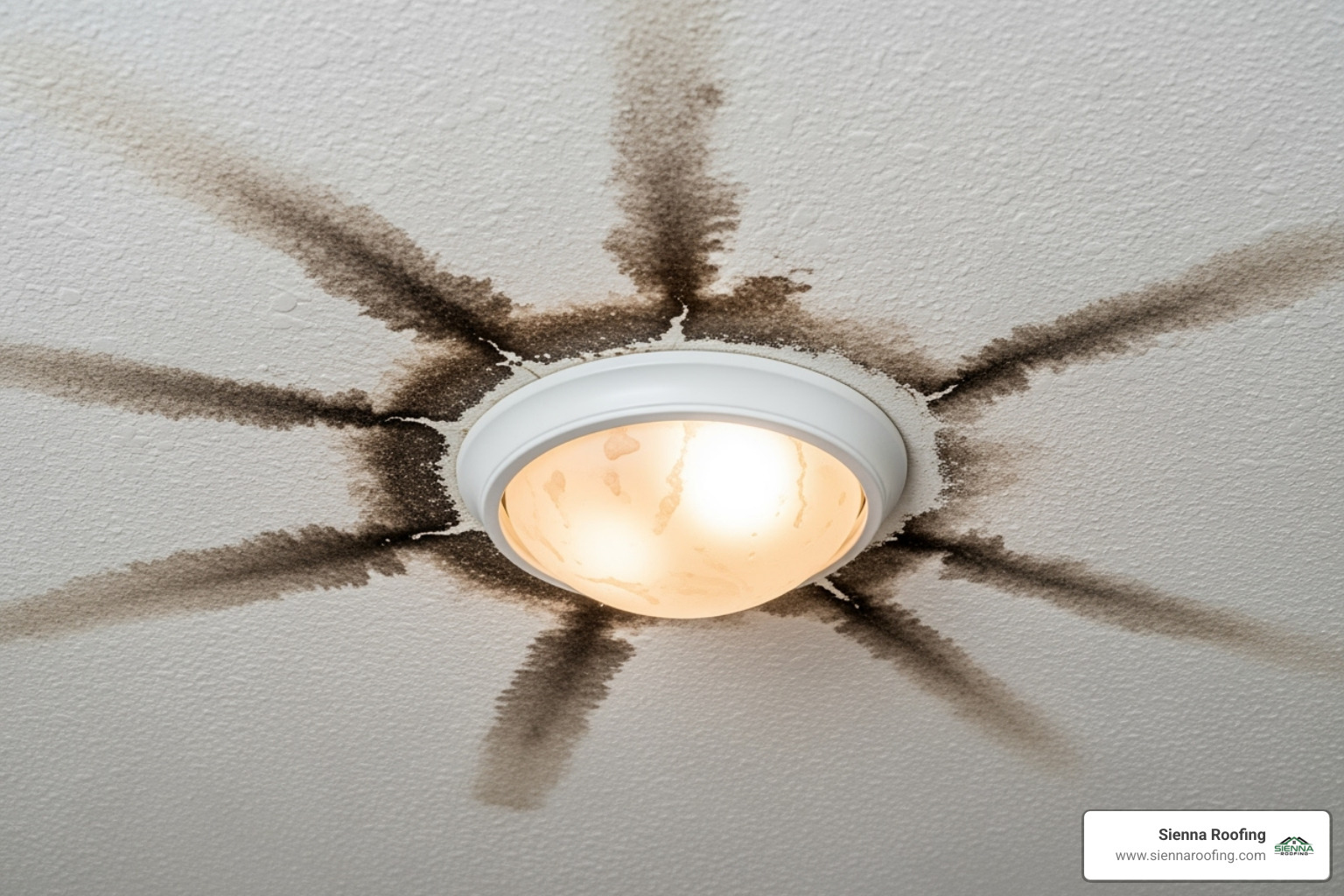
1. Water Stains on Ceilings or Walls: These are the most infamous signs of a roof leak. Brownish or yellowish rings, streaks, or spots on your ceiling or running down your walls are unambiguous evidence that water is penetrating your roof and attic. Even a small stain can indicate a much larger, saturated area of insulation and drywall. This moisture can lead to wood rot, structural decay, and the proliferation of hazardous mold and mildew if not addressed immediately.
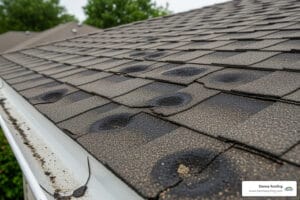
2. Missing, Cracked, or Curling Shingles: Your shingles are the armor of your roof. If you find shingles in your yard after a storm, or see obvious gaps on the roof surface, you have a breach. Look for shingles that are curling at the edges, cracking down the middle, or blistering. Curling shingles are especially problematic as they catch the wind, creating a domino effect that can rip off entire sections of your roof.
3. Excessive Shingle Granules in Gutters: The rough, sandpaper-like granules on asphalt shingles are their primary defense against damaging UV rays and weather. As a roof ages, it naturally sheds some granules. However, if you find large accumulations of these black, sand-like particles in your gutters and downspouts, it’s a sign that your shingles are becoming brittle, losing their protective coating, and rapidly approaching the end of their functional lifespan.
4. A Sagging or Drooping Roof Deck: This is a roofing emergency and indicates a severe structural problem. A sagging, bowing, or drooping roofline is often caused by water that has been trapped in the attic, leading to rotting of the underlying wooden sheathing or, in worst-case scenarios, compromised rafters. This issue requires immediate professional attention to prevent a potential roof collapse.
5. Algae, Moss, or Mold Growth: While sometimes dismissed as a cosmetic issue, green or black streaks are a sign of trouble. Black streaks are typically caused by Gloeocapsa magma, a type of algae that feeds on the limestone filler in shingles, slowly deteriorating them. Moss is even more destructive; it holds moisture against the roof surface like a sponge and can grow under shingle edges, lifting them up and making them vulnerable to wind and water intrusion.
6. Sudden Spikes in Energy Bills: Your roof is a critical component of your home’s thermal envelope. A damaged or poorly ventilated roof allows conditioned air from your home to escape, and super-heated or frigid attic air to infiltrate. This forces your HVAC system to work much harder to maintain a comfortable temperature, leading to a noticeable and sustained increase in your monthly energy bills.
7. Damaged or Rusted Flashing: Flashing consists of metal pieces that seal the joints and seams on your roof—around chimneys, skylights, vents, and in roof valleys. These are the most vulnerable points for leaks. If flashing is cracked, rusted, bent, or has pulled away from the structure, it creates a direct and often hidden pathway for water to enter your attic and home.
8. Roof Age Over 20 Years: An asphalt shingle roof is not a lifetime product. A standard 3-tab shingle roof typically lasts 20 years, while architectural shingles may last up to 30. If your roof is approaching or has surpassed this age, it’s wise to budget for a replacement and get a professional inspection, even if it appears to be in good condition from the ground. Its ability to withstand the next major storm is significantly diminished.
9. Daylight Visible Through Attic Roof Boards: On a sunny day, safely go into your attic (without stepping on the ceiling drywall) and turn off the lights. If you can see any slivers or pinholes of daylight coming through the roof deck, you have holes. While they may seem small, these openings are direct entry points for rain, snow, and pests.
10. Blistering or Peeling Interior or Exterior Paint: When a roof leak allows moisture to get into the wall cavities of your home, it can cause the paint to bubble, blister, and peel. As the sun heats the exterior walls or as indoor temperatures fluctuate, this trapped moisture tries to escape, pushing the paint off the surface from behind. This is often a secondary symptom of a long-term, undiscovered roofing or ventilation problem.
If you’re observing any of these critical warning signs, the time to act is now. Don’t wait for the problem to escalate. Contact a professional roofer to assess the condition of your roof and provide honest, expert guidance on the necessary next steps.
Repair or Replace? Making the Right Financial Decision
When you need a roofer, one of the most significant decisions you’ll face is whether to repair a specific issue or invest in a full roof replacement. A localized repair might cost between $300 and $1,500, offering a quick fix for an immediate problem. In contrast, a full replacement is a major capital improvement, averaging $8,000 to $15,000 or more, depending on the home’s size and materials. The correct decision hinges on a careful analysis of your roof’s age, the extent of the damage, and your long-term financial goals—not just the immediate price tag.
Roof age is your most reliable guide. If your asphalt shingle roof is under 10-15 years old and has sustained isolated damage (e.g., a few shingles blown off in a storm), a professional repair is usually the most cost-effective solution. However, if your roof is over 20 years old and exhibiting multiple warning signs (such as widespread granule loss, curling shingles, and small leaks), a replacement offers far better long-term value. Investing in a new roof prevents the frustrating and expensive cycle of chasing one repair after another on a system that is failing globally.
The extent of the damage also dictates the path forward. A single, small leak can often be repaired by replacing a few shingles and some flashing. However, widespread issues like multiple leaks, large sections of missing shingles, or soft, spongy spots on the roof deck (indicating rot) are clear indicators that the entire system is compromised and a replacement is necessary. A thorough roof inspection is the only definitive way to understand the full scope of the damage, both visible and hidden.
Choosing the right material is a crucial part of the replacement decision, impacting cost, longevity, and your home’s curb appeal. Here’s a more detailed comparison of common options suitable for the Houston climate:
| Material Type | Average Cost (per square foot) | Durability (Lifespan) | Maintenance Level | Notes |
|---|---|---|---|---|
| Architectural Asphalt Shingles | $4.50 – $7.50 | 25-30 years | Low | The most popular choice in the U.S. for its excellent balance of performance, aesthetics, and cost. The dimensional, laminated design offers better wind resistance and a more appealing look than older 3-tab shingles. Many come with algae-resistant coatings, ideal for humid climates. Learn more about asphalt shingles. |
| Standing Seam Metal Roofing | $9.00 – $18.00 | 50-70+ years | Very Low | Features vertical panels with concealed fasteners, offering exceptional durability, energy efficiency (by reflecting solar heat), and superior resistance to high winds and hurricanes. The higher upfront cost is offset by a much longer lifespan and minimal maintenance needs. |
| Tile Roofing (Clay or Concrete) | $10.00 – $25.00+ | 50-100+ years | Moderate | Offers unparalleled longevity and fire resistance with a distinctive, high-end aesthetic. Tiles are extremely heavy and require a reinforced roof structure, which must be verified by a structural engineer. They are impervious to rot and insects but can be brittle and require specialized labor to repair. |
| Composite Shingles | $8.00 – $15.00 | 40-50 years | Low | A premium synthetic material engineered to mimic the look of natural slate or wood shakes without the associated maintenance, weight, or cost. Composite shingles offer excellent impact resistance (Class 4 rating is common), fire resistance, and long-term durability. |
The right choice depends on your budget, how long you plan to stay in your home, your tolerance for maintenance, and your aesthetic preferences. A professional roofer can help you compare roofing materials in detail, providing samples and explaining the specific benefits of each for your property, ensuring you make a decision that best protects your home and financial future.
How to Choose a Contractor When You Need a Roofer
Choosing the right contractor is the single most important decision you will make in your roofing project. The quality of the installation, not just the materials, determines the longevity and performance of your roof. A reputable, professional roofer protects your home from the elements and provides peace of mind, while a poor choice can lead to catastrophic damage, voided warranties, legal liabilities, and immense stress. Here’s a detailed guide to vetting professionals and steering clear of unqualified or predatory operators, often called “storm chasers.”
1. Verify Licensing and Insurance (Non-Negotiable): This is the absolute first step. A legitimate contractor must carry two critical types of insurance. First, General Liability Insurance protects your property from any damage caused by the crew during the project. Second, Workers’ Compensation Insurance covers their employees in case of injury, protecting you from being held liable. Do not simply take their word for it. Ask for current certificates of insurance for both policies and call the issuing agency to verify that the policies are active and provide sufficient coverage. While Texas does not have a statewide roofing license, reputable contractors will be registered with local municipalities and may hold voluntary certifications from organizations like the Roofing Contractors Association of Texas (RCAT).
2. Check Local Reputation and Reviews: Look for contractors with a permanent, physical office and a long-standing presence in your community. This is a key differentiator from storm chasers who appear after a weather event and disappear months later, leaving you with no recourse for warranty claims. For homeowners in Texas, finding a Sugar Land roofer who intimately understands local building codes, climate challenges like hurricanes and intense heat, and permitting processes is a significant advantage. Meticulously read online reviews on Google, Yelp, and the Better Business Bureau (BBB). Don’t just look at the star rating; read the content of the reviews to identify patterns in customer feedback regarding professionalism, communication, site cleanliness, and adherence to the schedule and budget.
3. Get Multiple, Detailed Written Estimates: Never accept a verbal quote. Collect at least three itemized estimates from well-regarded contractors. A professional estimate is a detailed document, not just a number on a business card. It should clearly break down the costs for: labor, materials (specifying the brand and type of shingles, underlayment, etc.), tear-off and disposal of old materials, potential decking replacement costs (priced per sheet), flashing, ventilation, and permits. Compare the scope of work as much as the final price. An unusually low bid is a major red flag, often indicating that the contractor is cutting corners by using substandard materials, is uninsured, or plans to hit you with unexpected charges later.
4. Ask for Local References and See Their Work: A confident, established contractor will be proud of their work and happy to provide a list of recent local projects. This list should include the addresses of completed jobs and the contact information for the homeowners. Take the time to call a few of these references and ask specific questions: “Did the project finish on time and on budget?” “How was the crew’s professionalism and daily cleanup?” “Have you had any issues since the installation?” “How did they handle any unexpected problems?” Driving by the properties to see the quality of their work firsthand is also an excellent idea.
5. Understand the Contract and Warranty in Detail: Before signing anything, read the contract thoroughly. It should mirror the detailed estimate and explicitly state payment schedules, the project timeline, cleanup procedures, and lien release provisions. Your warranty package must include two distinct parts: the manufacturer’s warranty against material defects and the contractor’s workmanship warranty covering installation errors. Get all warranty details in writing. Understand their duration, what is covered, what is excluded, and what actions (like DIY repairs or improper ventilation) could void them. Reputable contractors are often certified by top manufacturers like GAF, which allows them to offer enhanced, longer-lasting warranties that non-certified installers cannot. You can verify a contractor’s certification using tools like the GAF contractor locator.
The Roofing Process: From Inspection to Final Walk-Through
Understanding the step-by-step process of a professional roof replacement can demystify the project and alleviate any anxiety. A well-managed project follows a structured, predictable sequence to ensure the highest quality outcome while minimizing disruption to your daily life.
-
Initial Inspection and Detailed Estimate: The process begins when a roofer conducts a comprehensive assessment. This isn’t just a quick look from the ground. It involves an exterior inspection of the shingles, flashing, and ventilation, an attic inspection to look for leaks, rot, and inadequate insulation, and an interior check for water stains. Based on these findings, they will provide a detailed report, a firm estimate, and a clear recommendation for repair or replacement.
-
Property Preparation and Protection: Before any work begins, the professional crew will meticulously prepare the site. This involves laying heavy-duty tarps over landscaping, gardens, and AC units. They will protect siding and windows and ensure a clear, safe path for removing old materials. Homeowners should move vehicles from the driveway and secure any fragile items on interior walls.
-
Tear-Off of Old Roofing: The crew will systematically remove all old roofing materials, including shingles, underlayment, and flashing, right down to the bare wooden roof deck. This is typically the noisiest and messiest part of the job, but it is absolutely critical. A complete tear-off allows for a thorough inspection of the underlying structure—a step that is skipped in a risky “roof-over.”
-
Decking Inspection and Repair: With the deck exposed, the project manager will inspect every square foot for signs of water damage, rot, or delamination. Any compromised or soft sections of plywood or OSB sheathing are cut out and replaced with new wood to create a solid, structurally sound foundation for the new roof system.
-
Installation of New Roofing System Components: This is where expertise matters most. The crew installs a multi-layered system according to manufacturer specifications and local building codes. This includes installing a drip edge at the eaves, an ice and water shield in valleys and around penetrations, a high-quality synthetic underlayment across the entire deck, new metal flashing, and finally, the primary roofing material (shingles, metal, etc.). Proper ventilation components, like ridge and soffit vents, are also installed to ensure attic airflow.
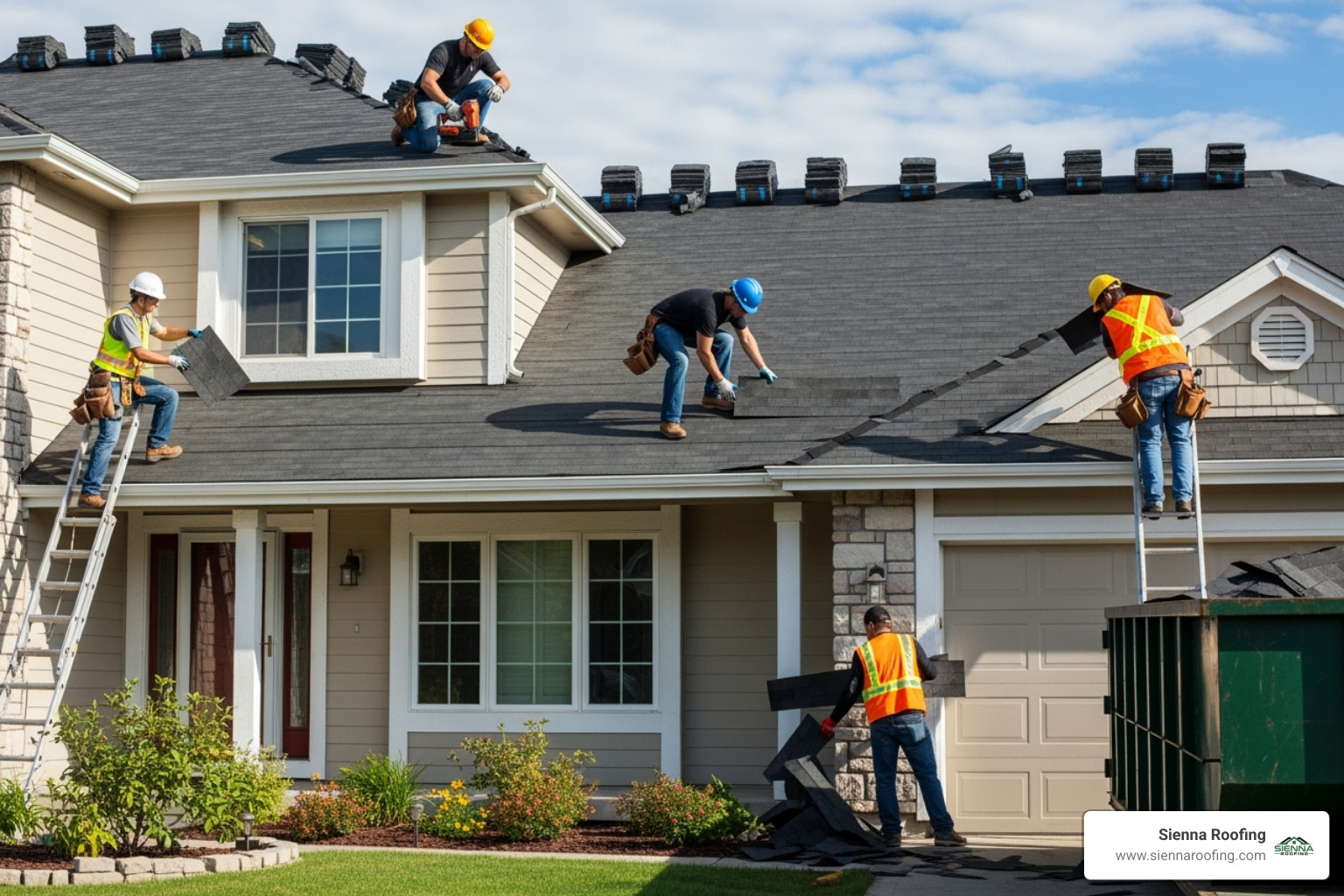
- Thorough Cleanup and Final Walk-Through: A professional crew takes pride in leaving your property cleaner than they found it. They will remove all construction debris from the site. Critically, they will use powerful magnetic sweepers to meticulously collect stray nails from your lawn, driveway, and garden beds. Once the cleanup is complete, you will perform a final walk-through with the project manager to inspect the work, ask any remaining questions, and confirm your 100% satisfaction before making the final payment. You will then receive all your warranty documents.
What to Do After Storm Damage
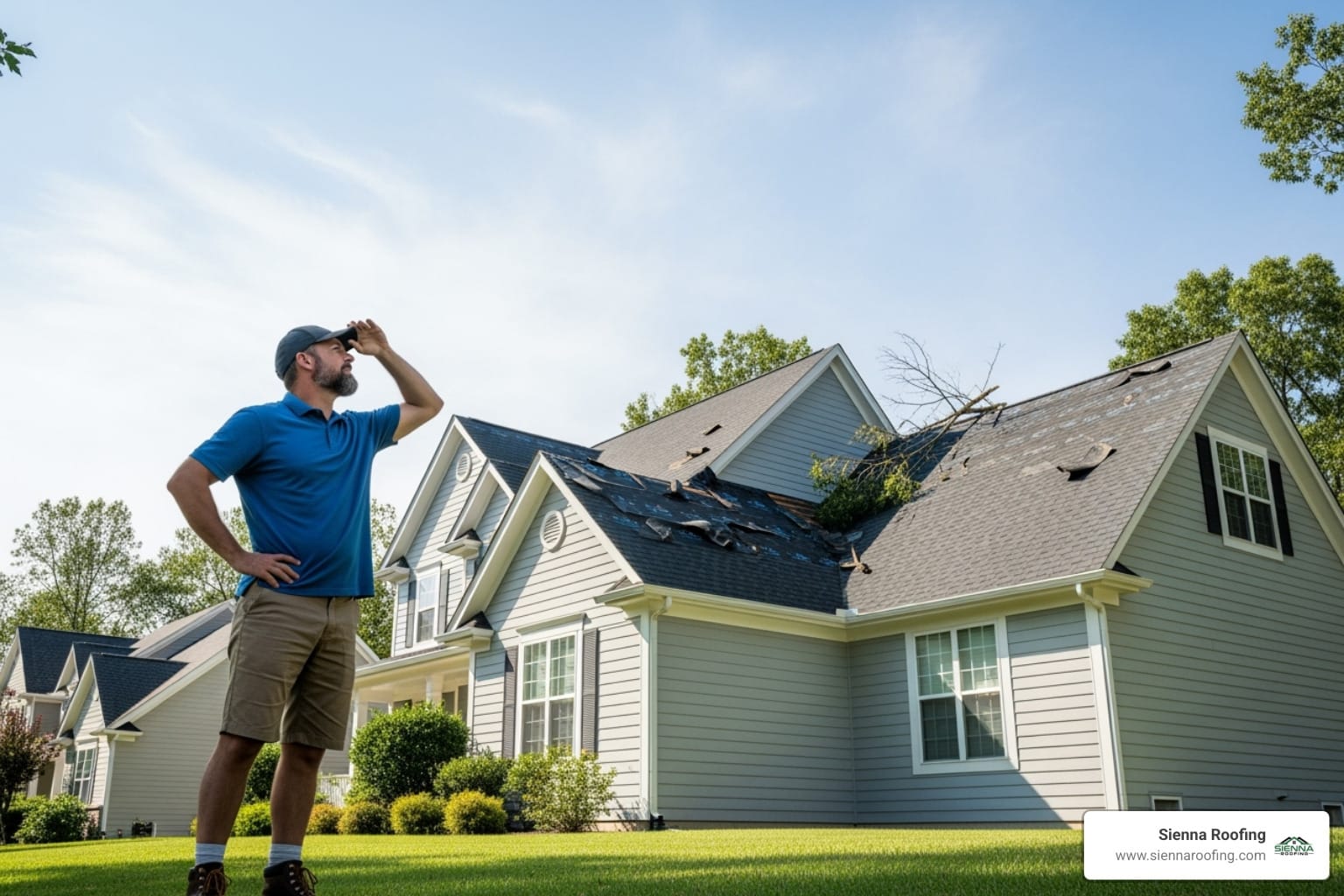
When a severe storm with hail or high winds hits, you need a roofer who specializes in storm damage and insurance claims. Your first priority is to ensure your family is safe. Once the storm has passed, and it is safe to go outside, walk around your property and document any visible damage with photos and videos for your insurance claim—dented gutters, damaged siding, and any shingles you find on the ground. Contact your insurance provider immediately to report the damage and start the claims process. To prevent further water intrusion, a professional roofer can perform emergency tarping on damaged sections of your roof. Do not climb on a potentially compromised roof yourself. A qualified roofer can then meet with your insurance adjuster on-site, pointing out damage they might otherwise miss and ensuring the scope of work approved by the insurer is accurate and sufficient to restore your roof to its pre-storm condition.
How Regular Maintenance Extends Your Roof’s Lifespan
Proactive maintenance is the key to maximizing your roof’s 20- to 30-year lifespan and preventing premature failure. An annual professional inspection can identify and address minor issues like a loose shingle, a cracked pipe boot, or failing sealant before they escalate into major leaks. Key maintenance tasks include biannual gutter cleaning to prevent water from backing up under the shingles, removing debris like leaves and branches that trap moisture against the roof surface, and checking the seals around all vents, pipes, and skylights. Enrolling in a professional maintenance plan is a small, cost-effective investment to protect your much larger roofing investment, ensuring its performance for years to come and keeping your warranty intact.
Frequently Asked Questions When You Need a Roofer
Here are direct, detailed answers to the most common questions we hear from homeowners in the Houston Metro area who are navigating a roofing project.
How long does a roof replacement take?
A complete roof replacement on an average-sized residential home (around 2,000-3,000 sq. ft.) typically takes 1 to 3 days to complete. Several factors can influence this timeline. The complexity of your roof, such as its steepness (pitch) and the number of facets, dormers, or skylights, can add time. The material being installed also plays a role; asphalt shingles are the fastest to install, while tile or standing seam metal can take longer. Weather is the biggest variable; work cannot proceed during rain or high winds. Finally, if significant repairs to the underlying roof deck are needed after the tear-off, this can add a half-day or more to the project.
Will my homeowner’s insurance cover a new roof?
Yes, in many cases, but not all. Homeowner’s insurance is designed to cover damage from sudden, accidental events, often called “Acts of God.” This includes damage from hail, windstorms, hurricanes, falling trees, or fire. Insurance does not cover roof replacement due to old age, deferred maintenance, or normal wear and tear. If your 25-year-old roof is simply worn out, the replacement cost will be your responsibility. After a storm, it’s crucial to document all damage with photos and file a claim promptly. A reputable roofer can help you navigate the claims process, but you should always review your policy first to understand your specific coverage, exclusions, and deductible amount.
Can I put new shingles over old ones?
While technically possible in some jurisdictions (usually only one layer is permitted), it is strongly not recommended by any reputable roofer. This practice, known as a “roof-over” or “layover,” is a shortcut that creates significant problems. First, it prevents the crucial inspection of the underlying roof deck. Any existing rot or damage is simply covered up, left to worsen. Second, it adds immense weight that your home’s structure may not be designed to support. Third, the new shingles will not lay flat over the uneven surface of the old ones, making them highly susceptible to wind damage and shortening their lifespan. Finally, and most importantly, a roof-over will almost always void the manufacturer’s warranty on the new shingles.
What is the best type of roof for the Houston climate?
For the Houston area, with its intense sun, high humidity, and hurricane risk, the best roof is one that addresses these challenges. Architectural asphalt shingles with an algae-resistant coating (like Scotchgard™ Protector) are an excellent and popular choice, offering good wind resistance and preventing ugly black streaks. Standing seam metal roofing is a superior option for durability, offering the highest level of wind uplift resistance for hurricanes and excellent solar reflectivity to lower cooling costs. The choice depends on balancing your budget with your desire for long-term performance and resilience.
How does roof ventilation work and why is it so important?
Proper roof ventilation is a balanced system of intake (usually through soffit vents under the eaves) and exhaust (usually through a ridge vent at the peak). This system creates a continuous flow of air that removes the super-heated, moist air from your attic. In the summer, it prevents heat from radiating into your living space, lowering energy bills. In the winter, it prevents moist, warm air from condensing on the underside of the cold roof deck, which would otherwise lead to rot and mold. A lack of proper ventilation can cut a roof’s lifespan in half and void material warranties.
What happens if you find rotten wood on my roof deck?
Discovering rotten decking is common during a full roof replacement. A professional contractor will have a plan for this. The project manager will stop work in that area, show you the damaged wood, explain why it needs to be replaced, and get your approval before proceeding. The cost of replacing decking is typically not included in the base estimate but is quoted as a per-sheet price in the contract (e.g., “$XX per sheet of plywood as needed”). This ensures transparency and prevents surprise charges.
Your Next Steps to a Secure and Reliable Roof
Realizing you need a roofer can feel overwhelming, but you are now equipped with the detailed knowledge to make a confident, informed decision. By understanding how to identify the critical warning signs of roof failure, evaluating the long-term financial implications of repairing versus replacing, and knowing the precise steps to vet a true professional, you can take control of the process and ensure the best outcome for your home and your investment. Your roof is your home’s single most important defense against the elements—its integrity is not a place to compromise on quality or expertise.
This guide has walked you through the complexities of a roofing project, from the materials and processes to the crucial choice of a contractor. The key takeaway is that a roof is a complete system, and its longevity depends on the quality of every component and, most importantly, the skill of the hands that install it. Proactive maintenance and timely action are your best tools for avoiding catastrophic failures and costly emergency repairs.
For homeowners in the Sugar Land, Missouri City, Richmond, and greater Houston area, Sienna Roofing provides expert roofing services built on a foundation of quality, transparency, and unwavering customer satisfaction. We are a part of your community, and we pride ourselves on delivering personalized, consultative service that gives you peace of mind from the first inspection to the final, spotless cleanup and walk-through.
Don’t wait for a small leak to become a disaster that threatens the structure of your home. Take the first, risk-free step toward securing your property. Call us at (832) 742-9922 or request your free, no-obligation roofing consultation online today!