Storm Damage Restoration Service: 5 Crucial Steps
What Is Storm Damage and Why Is Immediate Action Crucial?
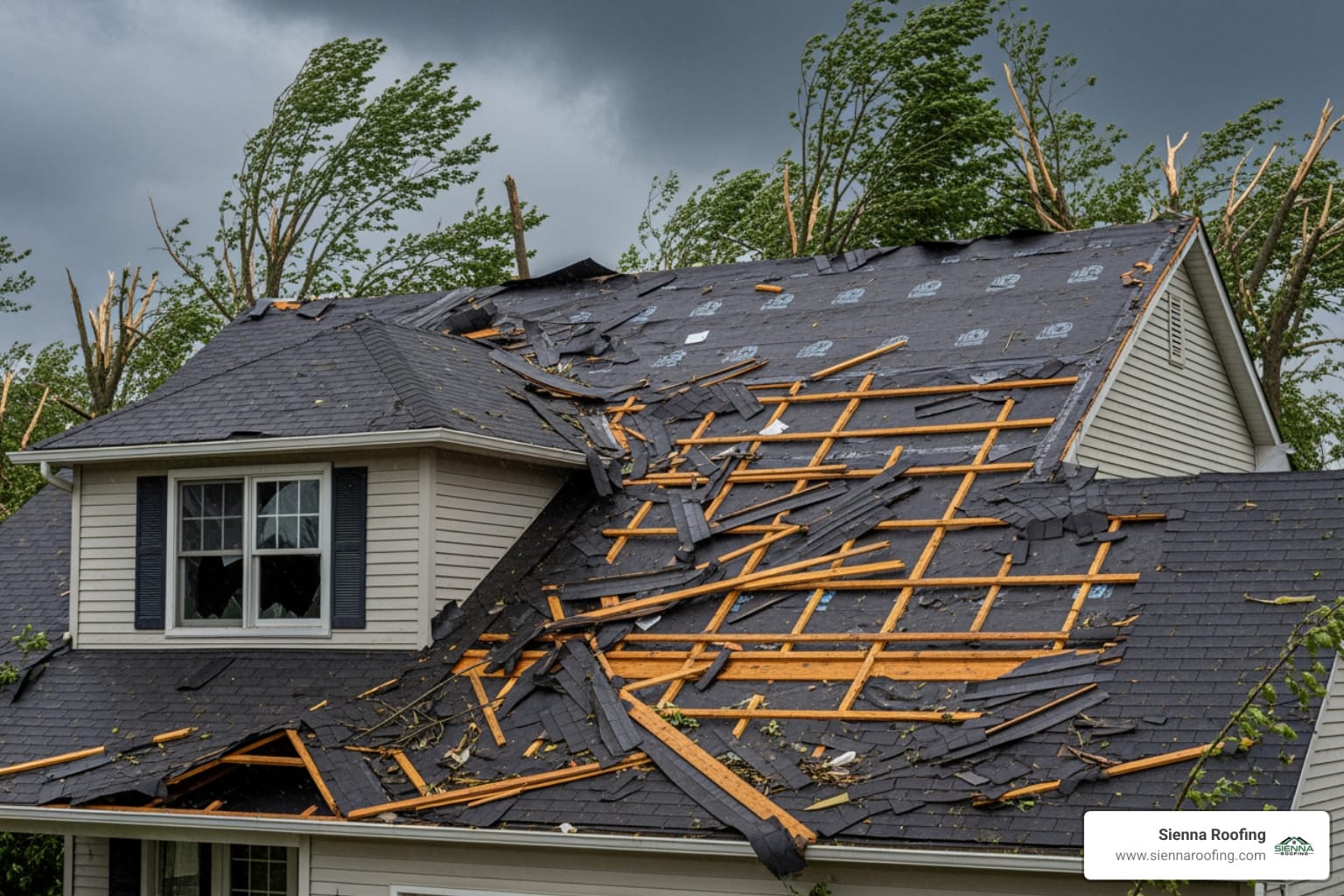
Storm damage restoration service is the professional process of repairing and restoring property after severe weather events. In the Houston Metro area, this means dealing with the aftermath of everything from powerful hurricanes bringing torrential rain to thunderstorms that spawn tornadoes and drop destructive hail. These services are comprehensive, addressing everything from emergency water extraction and structural repairs to full roof reconstruction. When a storm hits, the damage often goes far beyond what’s visible. That’s why professional storm damage restoration services from a trusted Houston roofing company are essential to mitigate further issues and begin recovery before small problems become catastrophic.
Quick Answer: What Storm Damage Restoration Includes
- Emergency Response: 24/7 availability with rapid on-site arrival to prevent the situation from worsening.
- Damage Assessment: A complete inspection of structural, water, and wind damage, using technology to find hidden issues.
- Water Extraction & Drying: Use of industrial pumps and dehumidifiers to remove moisture and prevent mold and structural rot.
- Debris Removal: Safe cleanup of fallen trees, shingles, and other hazardous materials.
- Structural Repairs: Emergency board-up, professional roof tarping, and complete reconstruction of damaged areas.
- Insurance Support: Detailed documentation and coordination with your insurance carrier to streamline your claim.
Water can seep into walls, attics, and foundations within minutes, causing devastation that spreads quickly. According to industry data, water damage can permanently ruin surfaces like drywall and hardwood floors if not addressed immediately, and mold can begin to grow in as little as 24-48 hours in Houston’s humid climate. Every hour you wait increases the complexity, scope, and cost of repairs.
I’m Andre Castro, CEO of Sienna Roofing & Solar. With over five years of hands-on experience, I’ve helped hundreds of Sugar Land homeowners recover after severe weather. This guide will walk you through the restoration process so you know exactly what to expect.
After the Storm: Your First 5 Steps to Mitigate Damage
When the skies clear, it’s normal to feel overwhelmed. Taking quick, smart steps is crucial to prevent more damage and ensure a smoother recovery. Here are the first five things to do immediately after a storm hits your home in the Houston area.
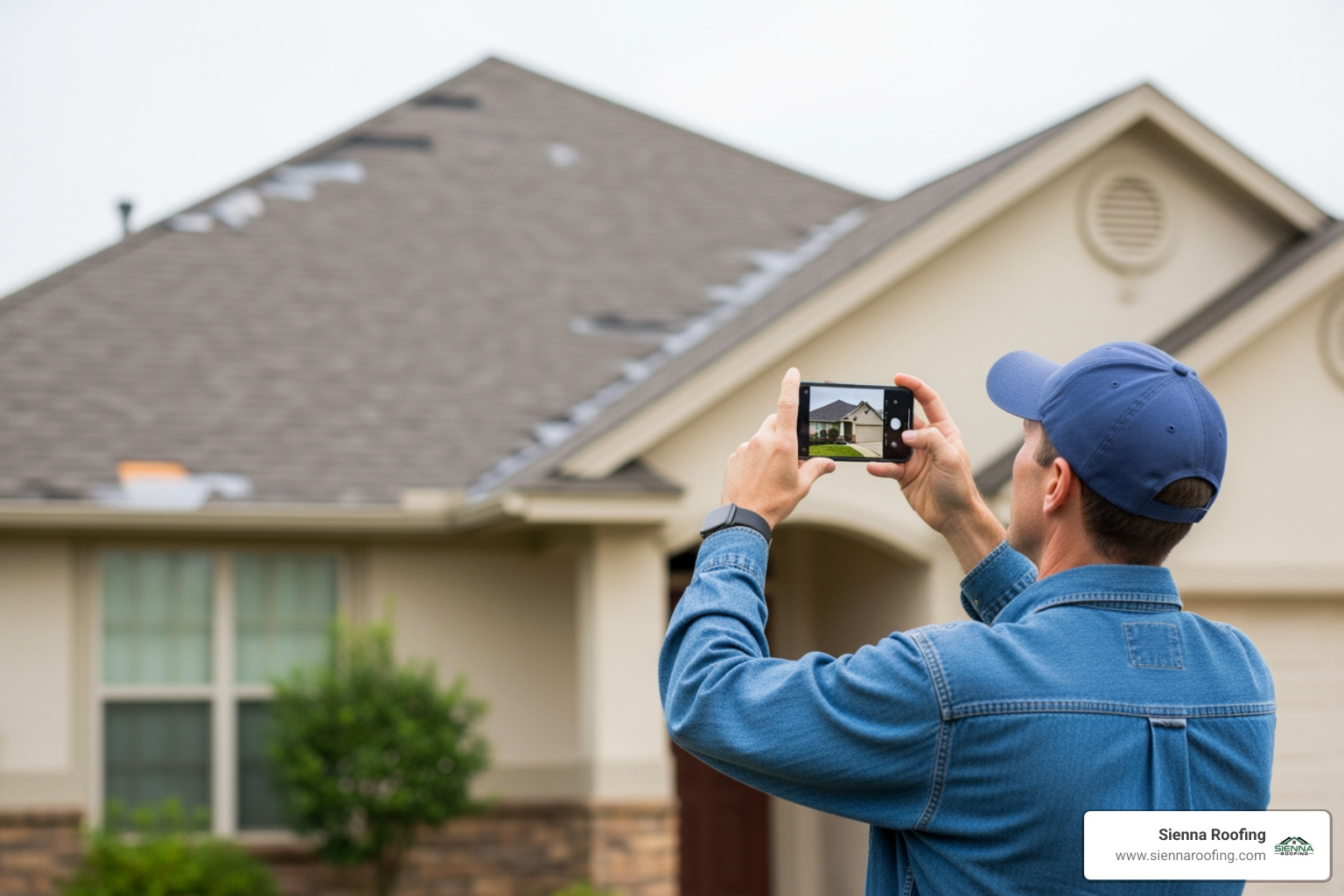
1. Safety First, Always
Before anything else, ensure your family’s safety. Do not re-enter your property until you are certain it’s safe. Be vigilant for downed power lines, which can be hidden in debris. Listen for the hissing sound of a gas leak (often smelling like rotten eggs) and evacuate immediately if you suspect one. Avoid unstable structures, including porches and sagging ceilings. If you see visible structural damage or electrical hazards, stay away. A qualified storm damage restoration service will secure the property before any work begins.
2. Document the Damage Thoroughly
This step is vital for your insurance claim. Once it’s safe, use your phone to take extensive pictures and videos of all damage. Capture wide shots of the property and close-ups of specific issues. Document damage both inside and out, from missing shingles on the roof to water stains on the ceiling. Photograph damaged personal belongings as well, making a list as you go. This detailed documentation is your most valuable asset when filing a claim. For more tips, see our guide on how to handle roof storm damage repair.
3. Implement Temporary Protection
Act quickly to prevent the damage from worsening, but do so safely. Avoid climbing on a wet, unstable roof. Placing a tarp over holes in the roof and using plywood to cover broken windows are critical temporary fixes. These measures, known as “emergency board-up” or “roof tarping,” protect your home from further water intrusion. While it may be tempting to DIY, professional restoration companies have the right equipment and safety training to perform these tasks correctly, ensuring the tarp is anchored securely to withstand wind and rain.
4. Contact Your Insurer Promptly
Call your insurance company as soon as possible to start the claims process. Have your policy number ready and share the documentation you’ve gathered. Ask them about your coverage for temporary repairs and additional living expenses (ALE) if you’re unable to stay in your home. Understanding what your policy covers is crucial for a successful claim.
5. Call a Professional Storm Damage Restoration Service
Do not delay in calling experts. Water damage becomes severe in minutes, and mold can grow within 24-48 hours. A professional storm damage restoration service can respond quickly to assess the situation and begin mitigation. While minor cleanup is manageable, extensive water extraction and structural repairs require specialized expertise.
Essential Items for a Storm Damage Documentation Kit
- A camera or smartphone for clear photos and videos.
- A notebook and pen to record observations and conversations with your insurer.
- A folder for receipts and important documents.
- Your insurance policy information and emergency contacts.
Identifying Hidden Storm Damage
Storms can cause unseen problems that lead to costly future repairs. Here are common signs of hidden damage:
- Water Stains on Ceilings or Walls: Even small, discolored spots can indicate a roof leak.
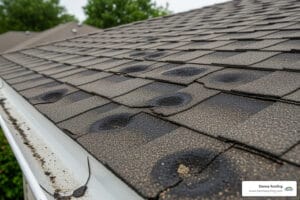
- Granule Loss on Shingles: An unusual amount of asphalt granules in your gutters suggests the protective layer of your shingles is compromised.
- Dented Gutters and Vents: Dents in metal components are a strong sign your roof likely sustained hail impact.
- Attic Leaks: Check your attic for damp insulation, water marks on wood, or visible daylight, which are all signs of water intrusion.
- Missing or Curled Shingles: High winds can lift, tear, or crease shingles, making them vulnerable to future leaks.
- Flickering Lights: Water intrusion near electrical wiring is a serious fire hazard. If you notice any electrical issues, call an electrician and a restoration professional immediately.
If you suspect hidden damage, it’s best to consult experts. Our team can help you tell if your roof needs repair from hail damage with a safe, comprehensive assessment.
The Professional Storm Damage Restoration Service Process: From Chaos to Calm
When a storm leaves your home in disarray, a professional storm damage restoration service provides a structured process to turn that chaos back into calm. We follow a clear, industry-approved path to efficiently bring your property back to its pre-storm condition.
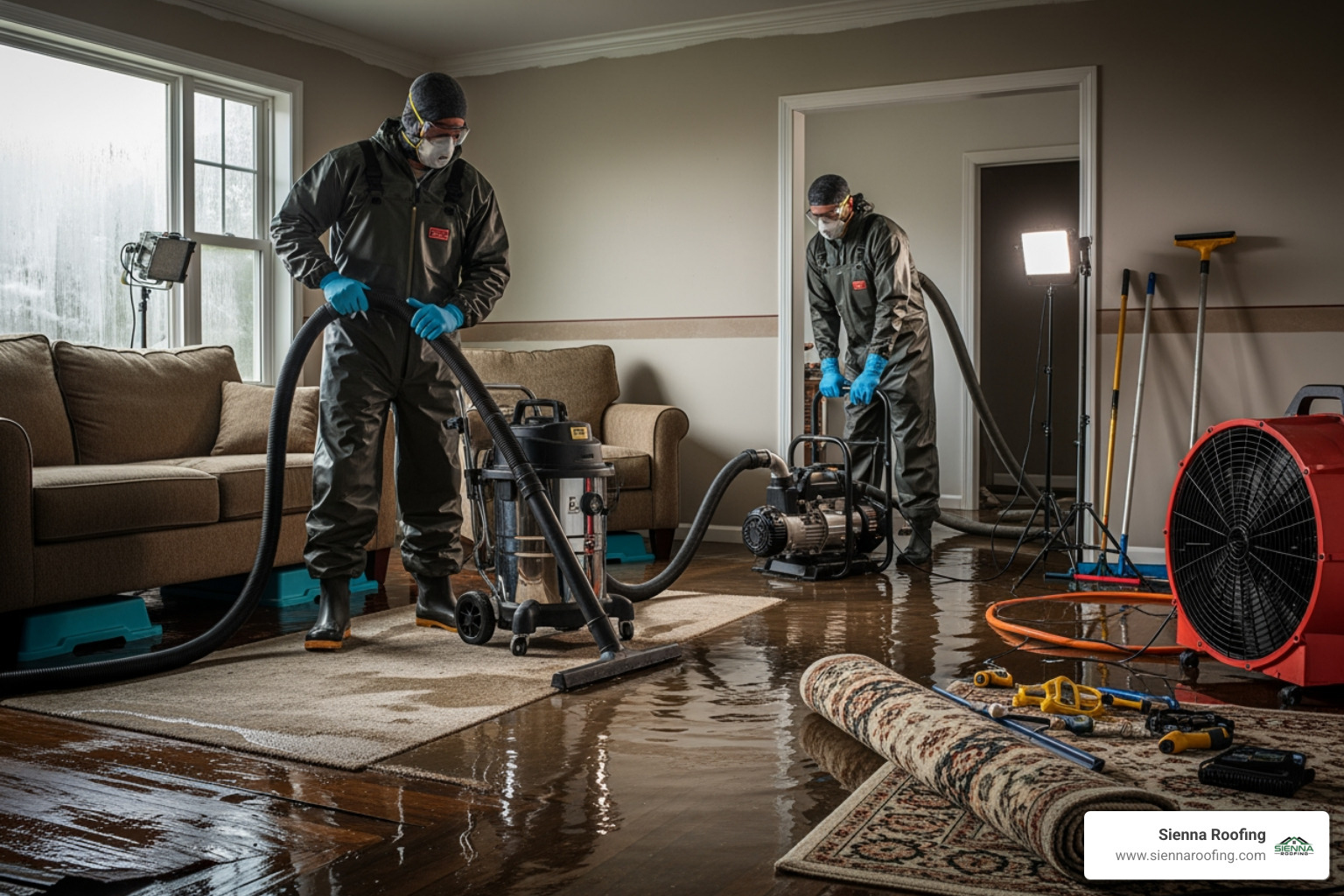
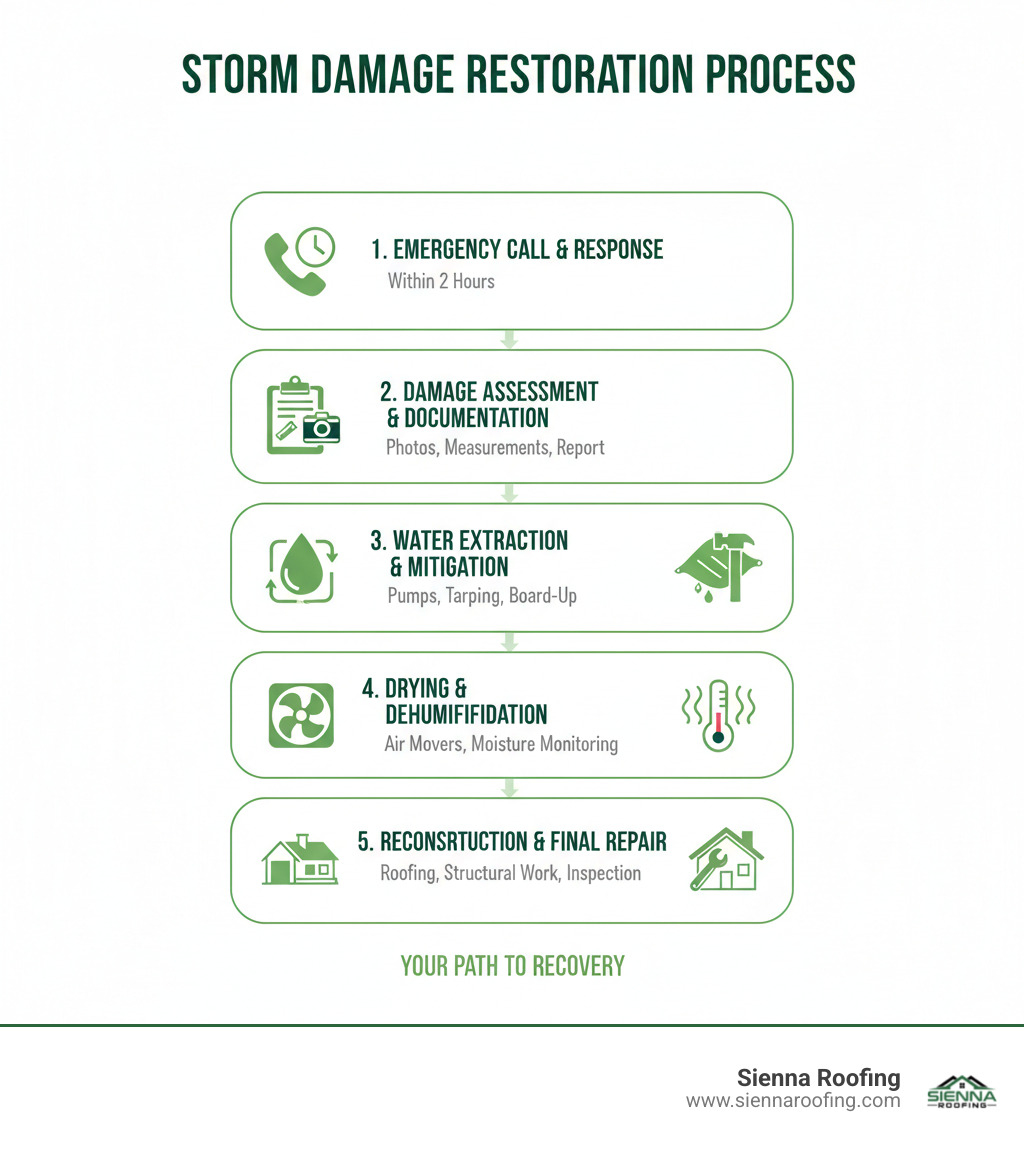
- Emergency Contact and Rapid Response: Time is critical. Leading restoration services offer 24/7 emergency response, with the goal of being on-site within hours to secure your property and prevent further damage.
- Comprehensive Damage Assessment: Our project managers conduct a thorough inspection of your roof, exterior, and interior to identify both obvious and hidden damage. You receive a detailed report and a transparent cost estimate before work begins.
- Water Extraction and Mitigation: We use industrial-grade pumps and extraction equipment to quickly remove standing water. Water is categorized (from clean Category 1 to contaminated Category 3), and the process is adjusted accordingly to ensure safety.
- Drying and Dehumidification: Professional-grade air movers and dehumidifiers are used to remove excess moisture from the air, walls, and floors. This scientific drying process is carefully monitored to prevent warping and other moisture-related issues.
- Cleaning and Sanitizing: Our team cleans and sanitizes all affected surfaces to eliminate debris, dirt, and contaminants. This step is crucial for removing health hazards and preventing future mold growth.
- Restoration and Reconstruction: Once the property is clean and dry, we begin repairs. This can range from replacing a roof and repairing walls to full reconstruction, ensuring all work meets local building codes and restores your property to its original condition.
What to Expect from a Professional Storm Damage Restoration Service
Choosing the right storm damage restoration service means finding a team with proven expertise. Look for IICRC (Institute of Inspection, Cleaning and Restoration Certification) certified technicians. This certification is the gold standard, ensuring they follow industry best practices for water damage restoration and mold remediation.
Modern restoration relies on Specialized Technology to identify and address all damage:
- Thermal Imaging Cameras: Detect hidden moisture behind walls and under floors that would be missed by the naked eye.
- Industrial-Grade Air Movers: Speed up evaporation to dry materials efficiently.
- High-Capacity Dehumidifiers: Remove airborne moisture to prevent secondary damage like warping and mold, which is vital in humid climates like Houston’s.
- Moisture Meters: Precisely measure moisture levels to ensure materials are completely dry before reconstruction begins.
These technologies, combined with our team’s expertise, allow us to offer truly effective restoration. You can learn more by reading our guide on what to look for in storm damage experts.
Custom Recovery: Residential vs. Commercial Storm Damage
While the core restoration process is similar, the approach for residential and commercial properties differs. For homeowners, the focus is on restoring comfort and safety. For businesses, minimizing downtime and protecting revenue is also a critical priority.
| Feature | Residential Restoration | Commercial Restoration |
|---|---|---|
| Scale | Smaller, single-family homes. | Large-scale, complex facilities. |
| Priority | Restoring safe living conditions. | Minimizing business downtime. |
| Systems | Standard home systems (HVAC, plumbing). | Specialized machinery, IT infrastructure. |
| Insurance | Homeowner’s policies. | Complex commercial policies. |
| Compliance | Standard building codes. | Adherence to OSHA regulations and industry standards. |
Commercial properties require a strategic approach. Many businesses have pre-disaster plans in place that outline immediate actions and contacts to speed up recovery. Our team at Sienna Roofing understands these nuances and tailors our storm damage restoration service to meet the unique needs of both homeowners and business owners.
Your Advocate in Recovery: Navigating Insurance Claims
Dealing with insurance companies after a storm can be stressful, but with the right storm damage restoration service in your corner, you can steer the process successfully. A reputable contractor acts as your advocate, ensuring you get a fair settlement to restore your home properly.
Understanding Your Policy and Key Terms
Your first line of defense is understanding your policy. Before a storm, review your homeowner’s insurance to know what’s covered (wind, hail) and what’s excluded (flooding, which typically requires a separate policy). It’s also critical to understand your deductible and whether your policy provides for Replacement Cost Value (RCV) or Actual Cash Value (ACV).
- Replacement Cost Value (RCV): This coverage pays to repair or replace your damaged property with materials of similar kind and quality, without deducting for depreciation. This is the preferred type of coverage.
- Actual Cash Value (ACV): This coverage pays the replacement cost minus depreciation. For example, if your 10-year-old roof is destroyed, an ACV policy will only pay for the remaining value of that old roof, not the full cost of a new one.
Insurers typically cover damage from sudden events, not gradual deterioration from poor maintenance.
The Claims Process: From Filing to Settlement
Filing your claim promptly is crucial. Contact your provider as soon as possible with your policy number and the detailed documentation you gathered. Your insurance company will assign an adjuster to assess the damage. This professional works for the insurance company, not you. It’s important to be present during their inspection and share your photos and notes.
This is where working with your restoration contractor is invaluable. At Sienna Roofing & Solar, we conduct our own comprehensive assessment. Insurance adjusters can sometimes miss hidden issues like compromised roof decking or subtle hail impacts. We prepare a detailed estimate reflecting the full scope of work and can meet with your adjuster to ensure all necessary repairs are included in your claim. If the adjuster’s estimate is incomplete, we can submit a supplemental claim with evidence to cover the additional necessary repairs. We act as your advocate to help you receive fair compensation.
For more on this topic, our guide to storm damage roof replacement offers valuable insights.
Avoid Storm Chasers
After major storms, contractors from out-of-state often appear, offering low bids and pressuring homeowners. These companies may perform shoddy work or disappear after taking a deposit. Red flags include offers to “waive your deductible” (which is insurance fraud), high-pressure tactics, and a lack of a local office or reputation. Always choose a contractor based on quality, local reputation, and proven expertise.
As a Sugar Land-based company, we are invested in our community. We’re your neighbors, and our reputation depends on delivering honest, quality work. When you call us at (832) 792-9338, you’re working with a team that will be here long after the storm, standing behind our 100% satisfaction guarantee.
Fortifying Your Future: Proactive Storm Preparedness
While we can’t stop storms, we can control how prepared we are. Taking proactive steps is your best defense against the severe weather that often rolls through the Houston area. This investment can save you significant worry, time, and money.
-
Schedule Regular Roof Inspections. Your roof is your home’s first line of defense. A professional inspection, recommended annually, can identify loose shingles, damaged flashing, or worn sealants before they become major problems during a storm. Learn what’s covered in a professional roof damage assessment.
-
Maintain Your Gutters. Clogged gutters cause water to back up, which can damage your roof, fascia, and foundation. Regularly cleaning your gutters or installing gutter guards is a simple task that prevents costly water damage.
-
Trim Trees and Secure Outdoor Items. Overhanging or weak tree branches are a significant threat to your roof and windows. Have your trees professionally trimmed. In high winds, patio furniture, grills, and even potted plants can become dangerous projectiles. Before a storm, bring these items inside or tie them down securely.
-
Reinforce Windows and Doors. Windows and doors are vulnerable points. Consider investing in hurricane-rated windows or shutters for long-term protection. At a minimum, have plywood pre-cut to board up windows before a storm arrives.
-
Create a Disaster-Readiness Plan. Every family should have an evacuation route and a communication plan. Assemble a disaster kit with water, non-perishable food, flashlights, batteries, and a first-aid kit. According to Ready.gov, a comprehensive plan is one of the most effective ways to protect your family. For businesses, an Emergency Ready Plan (ERP) that outlines critical contacts (like your trusted storm damage restoration service) and recovery steps is invaluable.
-
Review Your Insurance Policy Annually. Don’t wait for a storm to find out you’re underinsured. Review your homeowner’s policy each year with your agent to ensure your coverage is adequate for rising rebuilding costs and that you understand your deductibles.
By taking these proactive steps, you build resilience and gain peace of mind, significantly reducing your property’s vulnerability to storm damage.
Your Questions Answered: FAQs About Storm Damage Restoration
It’s normal to have questions after a storm. To help you feel more prepared, we’ve answered some of the most common questions we hear about storm damage restoration service.
How quickly should I call for service after a storm?
Immediately. Time is critical, as water can cause irreversible harm and mold can grow in as little as 24-48 hours. Most professional restoration companies, including Sienna Roofing & Solar, offer 24/7 emergency response. The faster we can secure your property and begin mitigation, the more damage we can prevent. Waiting even a day can dramatically increase the scope and cost of repairs.
What qualifications should a restoration company have?
Look for a company with these key qualifications to ensure your property is in capable hands:
- IICRC Certified Technicians: The Institute of Inspection, Cleaning and Restoration Certification (IICRC) is the industry’s gold standard. It ensures technicians have the knowledge to follow best practices.
- Licensed and Insured: Verify the company is licensed to operate in Texas and carries comprehensive liability insurance to protect you and the workers on your property.
- Proven Local Track Record: Choose a company with a strong reputation in your community. A local team understands regional weather patterns and building codes. Check reviews and ask for references for services like Sugar Land storm damage.
Can I perform storm damage repairs myself?
It is strongly discouraged for anything beyond minor cleanup. While picking up small debris is fine, significant repairs should be left to professionals for several reasons:
- Safety: Damaged properties contain hazards like electrical shock, structural collapse, and contaminated water. Professionals have the training and safety gear to manage these risks.
- Specialized Equipment: Effective restoration requires industrial-grade equipment like high-capacity dehumidifiers and air movers that homeowners do not have.
- Hidden Damage: Professionals use tools like thermal cameras to find unseen moisture that can lead to long-term mold and rot if left unaddressed.
- Insurance Complications: Improper DIY repairs can jeopardize your insurance claim. A professional storm damage restoration service provides the documentation your insurer needs.
How long does the storm damage restoration process take?
The timeline varies significantly based on the extent of the damage. A minor roof repair and water mitigation might take only a few days. However, a major event involving significant water intrusion and reconstruction can take several weeks or even months. The process includes mitigation, a drying period that can last 3-5 days on its own, and then the final reconstruction phase. A professional contractor will provide you with a detailed timeline after their assessment.
What is the difference between water mitigation and water restoration?
Though often used together, these are two distinct phases. Water mitigation refers to the emergency services performed to prevent further damage. This includes extracting water, setting up drying equipment, and tarping the roof. The goal is to stabilize the property. Water restoration is the second phase, which involves repairing and rebuilding the property to its pre-loss condition. This includes services like replacing drywall, painting, and installing new flooring. Mitigation stops the bleeding; restoration heals the wound.
Conclusion: Begin Your Recovery with Trusted Local Experts
Immediate, professional restoration stops secondary damage, accelerates insurance approvals, and returns your property to pre-loss condition faster.
When a storm leaves a trail of damage, the feeling of helplessness can be overwhelming. The good news is you don’t have to face it alone. A professional storm damage restoration service is your partner in recovery, guiding you from chaos back to calm.
The journey involves immediate emergency response to secure your property, a meticulous assessment to uncover all damage, thorough cleaning and drying to prevent mold, and expert reconstruction to bring your home back to life.
For homeowners and businesses throughout the Houston area—from Sugar Land to Missouri City and Richmond—Sienna Roofing & Solar is your local ally. We aren’t out-of-town storm chasers; we are your neighbors, and our 100% satisfaction guarantee is our commitment to you. We guide you through every step, from the first inspection to working with your insurance company.
Storms are a part of life in Texas, but you can control how you respond and rebuild. Don’t wait and worry about a damaged roof or water-stained walls. Start your recovery today with a team that cares about your peace of mind and has proven expertise in roofing storm damage repair services. Let us help you weather any storm.